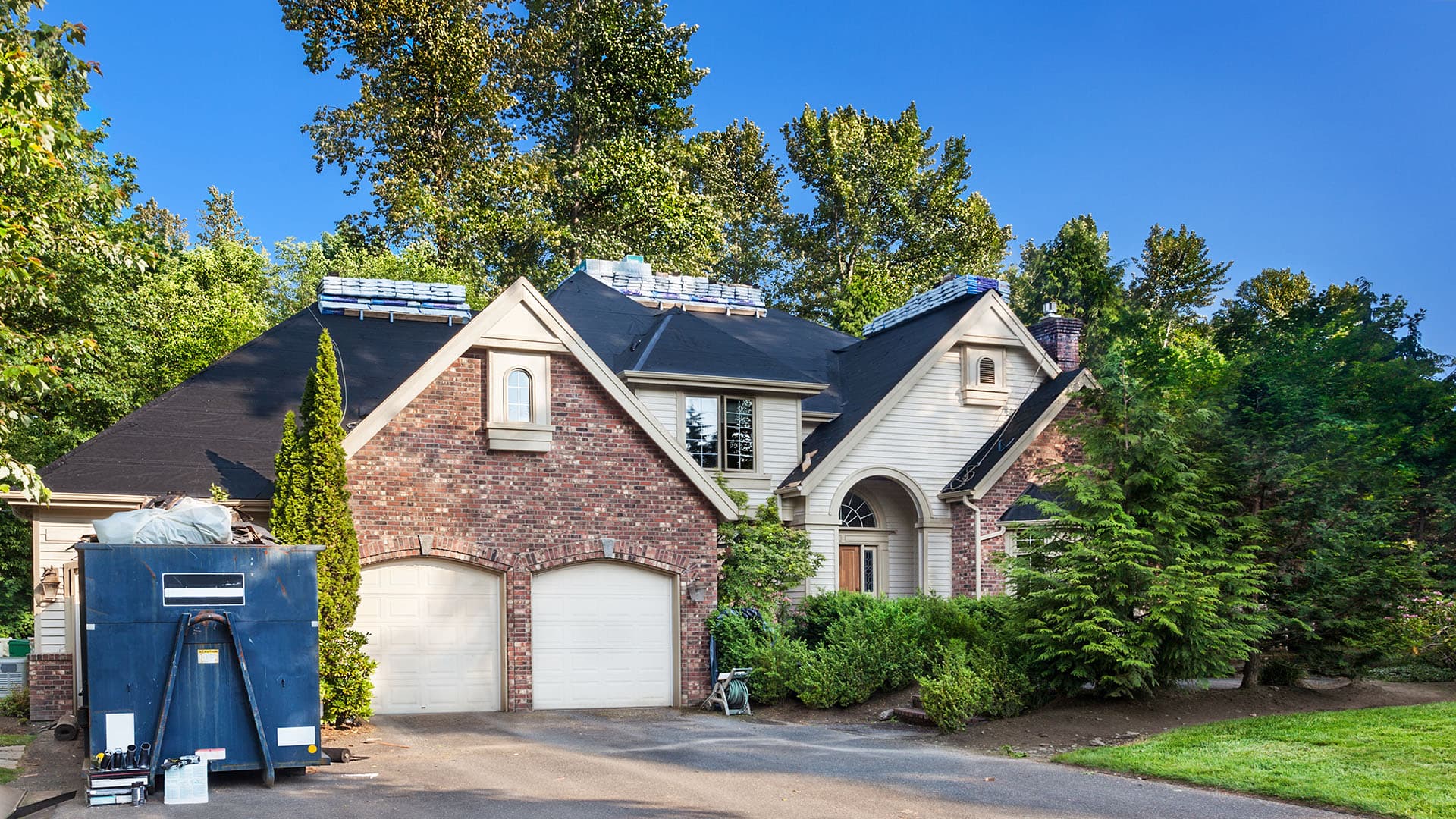
Roofing Dumpster Rentals.
Heavy-duty roofing dumpster rentals designed specifically for shingle tear-offs, roof replacements, and roofing debris disposal. Includes weight estimates and size recommendations by roof square footage.
Get quotes for your roofing dumpster rentals.
Compare prices from independent local haulers in your ZIP. No broker auctions, no markup.
20-yard prices for roofing dumpster rentals in major cities.
Real survey-sourced 7-day rental prices for the most-ordered size for roofing dumpster rentals (20 Yard) across 20 major US metros. Click any city for the full breakdown.
| City | State | 7-day rental |
|---|---|---|
| Houston | TX | $350–$550 |
| New York City | NY | $500–$700 |
| Los Angeles | CA | $475–$625 |
| Chicago | IL | $375–$500 |
| Phoenix | AZ | $350–$450 |
| Philadelphia | PA | $450–$600 |
| Dallas | TX | $400–$575 |
| Atlanta | GA | $375–$500 |
| Miami | FL | $350–$500 |
| Seattle | WA | $350–$650 |
| Denver | CO | $350–$500 |
| Boston | MA | $500–$675 |
| San Francisco | CA | $525–$700 |
| Detroit | MI | $450–$525 |
| Minneapolis | MN | $400–$600 |
| San Diego | CA | $475–$600 |
| Tampa | FL | $375–$500 |
| Orlando | FL | $300–$350 |
| Charlotte | NC | $400–$550 |
| Las Vegas | NV | $350–$500 |
Source: Town Bins cost guide. See our cost guide →
What this project is.
Roofing dumpsters are heavy-duty roll-off containers built to handle the extreme weight of roofing materials. Asphalt shingles are among the heaviest construction debris — each roofing "square" (100 sq ft of roof) weighs 250-350 lbs. These containers come in 10-30 yard sizes with reinforced construction and specific weight allowances for shingle loads.
A typical 2,000 sq ft roof tear-off produces 2-4 tons of shingles alone — that's more than a full-size pickup truck can handle in 10+ trips. Roofing debris cannot be handled by regular trash service, and the concentrated weight requires containers with appropriate weight limits. Having the dumpster positioned close to the house lets crews load directly from the roof, cutting project time significantly.
Most residential roofing projects need dumpsters for 2-5 days. Professional crews often complete tear-offs in 1-2 days, while DIY projects may take a week. Keep the container until all debris is removed and cleanup is complete.
Sizes that fit.
Small roof (1,000-1,500 sq ft), garage or shed roof, single-layer removal
10-yard guideAverage residential roof (1,500-2,500 sq ft), single-layer shingles
20-yard guideLarge home (2,500+ sq ft), multi-layer tear-off, or commercial roofing
30-yard guideHow long you'll need it.
1-3 days for a small roof or garage/shed tear-off
3-5 days for an average residential roof replacement
5-10 days for large or complex roofs, multi-layer tear-offs, or commercial projects
What it costs.
What the debris weighs.
Heavy materials hit weight limits long before the container looks full. Use this to size up when you're on the line.
| Material | Weight / cu yd | Notes |
|---|---|---|
| 3-Tab Asphalt Shingles | 750-900 lbs | 1 roofing square (100 sq ft) = 200-250 lbs |
| Architectural Shingles | 1,000-1,300 lbs | 1 roofing square = 300-350 lbs — 50% heavier than 3-tab |
| Wood Shakes | 400-600 lbs | Lighter than asphalt but more bulky |
| Slate Tiles | 2,500-3,500 lbs | Extremely heavy — always use a dedicated small container |
| Clay / Concrete Tiles | 2,000-3,000 lbs | Requires heavy-duty container with low weight limits |
| Plywood Decking | 300-500 lbs | Only needed if decking is damaged and being replaced |
| Mixed Roofing Debris | 800-1,200 lbs | Shingles + nails + underlayment + flashing combined |
Overage fees are typically $50–$100 per ton over the weight limit. Ask your hauler about allowances before loading — most won't volunteer the number.
How to do it right.
Calculate Your Roof Size and Shingle Weight
Measure your roof square footage and determine the number of existing shingle layers. This determines both container size and weight capacity needed.
- ·Rule of thumb: 1 roofing square (100 sq ft) of shingles = 200-350 lbs
- ·Single-layer tear-off: 2,000 sq ft roof = 2-3 tons of debris
- ·Multi-layer tear-off can double or triple the weight
- ·Architectural shingles weigh 50% more than 3-tab shingles
Choose a Dumpster Designed for Roofing
Select a container size that matches your roof square footage, and confirm weight limits. Roofing containers have lower weight limits than standard dumpsters due to the extreme density of shingles.
- ·1,000-1,500 sq ft roof: 10-15 yard dumpster
- ·1,500-2,500 sq ft roof: 20 yard dumpster
- ·2,500+ sq ft or multi-layer: 30 yard dumpster
- ·Confirm weight limit is 2-4 tons for roofing debris
Position the Dumpster Strategically
Place the container close to the house but accessible for tear-off. Roofing crews often load directly from the roof into the dumpster, so positioning is critical for efficiency and safety.
- ·Place directly below the roof edge when possible
- ·Protect driveway with plywood — roofing debris is extremely heavy
- ·Consider two smaller dumpsters for multi-story or complex roofs
- ·Ensure no overhead power lines near placement area
- ·Leave room for ladder placement and crew movement
Protect Your Property During Tear-Off
Roofing projects generate sharp nails, heavy debris, and potential property damage. Take precautions to protect landscaping, windows, and exterior features.
- ·Cover plants and shrubs with tarps
- ·Close windows and garage doors
- ·Move vehicles away from house
- ·Use magnetic sweepers to collect stray nails after the project
- ·Cover AC units and outdoor equipment
Load Heavy Materials Properly
Distribute shingle weight evenly in the container. Never exceed the fill line or weight limit — overloaded roofing dumpsters cannot be safely transported.
- ·Spread debris evenly across container bottom
- ·Don't pile shingles in one corner (uneven weight is a safety hazard)
- ·Keep load level — roofing debris settles and compacts
- ·Separate metal flashing for potential recycling
- ·Never exceed the weight limit (usually 2-4 tons for roofing)
Schedule Prompt Pickup
Once your roof tear-off is complete and all debris is loaded, schedule pickup within 24-48 hours to avoid daily rental fees.
- ·Perform final property sweep for loose nails with a magnetic sweeper
- ·Ensure container is not overloaded before requesting pickup
- ·Clear area around dumpster for truck access
- ·Take photos of filled container for records
- ·Confirm final weight and any overage charges
Do you need a permit?
Roofing dumpsters placed on your driveway or property do not require a permit. A permit is needed only if the container must be placed on a public street. Since roofing dumpsters should be positioned close to the house for efficient loading, most are placed on driveways.
- ·Position the dumpster on the driveway directly below the roof edge to avoid permit needs
- ·If street placement is necessary, apply for a permit 5-7 days before your roofing date
- ·Some cities have expedited permits for contractor jobs — ask your roofer
- ·Ensure the dumpster placement doesn't block sidewalks or fire hydrants
What not to do.
- 01Choosing a container that's too large — roofing debris hits weight limits before filling the volume
- 02Not confirming the weight limit is adequate for shingles (need 2-4 ton allowance)
- 03Placing the dumpster too far from the house, forcing crews to carry heavy debris
- 04Not accounting for multiple shingle layers — a 2-layer tear-off doubles the weight
- 05Forgetting to protect landscaping, windows, and AC units from falling debris
- 06Not using a magnetic nail sweeper after the project — loose nails damage tires
- 07Piling shingles in one corner instead of distributing weight evenly across the container
What can be recycled.
Asphalt shingles are increasingly recyclable. Ground shingles are used as aggregate in road paving and new asphalt production. Recycling diverts millions of tons from landfills annually and can reduce your disposal costs if a recycling facility is available in your area.
- ·Ask your provider about shingle recycling — it may reduce disposal fees
- ·Separate metal materials (flashing, gutters) for scrap recycling
- ·Keep roofing debris separate from household trash for recycling eligibility
- ·Not all areas have shingle recycling facilities — check availability before assuming savings
Frequently asked.
What size dumpster do I need for a roof tear-off?
For a typical residential roof: 1,000-1,500 sq ft needs a 10-15 yard dumpster, 1,500-2,500 sq ft needs a 20 yard, and 2,500+ sq ft or multi-layer tear-offs need a 30 yard container. Roofing debris is extremely heavy, so weight capacity is as important as volume.
How much does a roofing dumpster rental cost?
Roofing dumpster rentals typically cost $300-$700 depending on size and location. A 20 yard container for an average roof costs $400-$550. Roofing containers may cost slightly more than standard dumpsters due to weight restrictions and higher disposal fees for shingles.
How heavy are roofing shingles?
Asphalt shingles are extremely heavy. 3-tab shingles weigh 200-250 lbs per roofing square (100 sq ft), while architectural shingles weigh 300-350 lbs per square. A typical 2,000 sq ft roof with single-layer shingles weighs 2-3 tons. Multi-layer tear-offs, or slate/tile roofs, weigh significantly more.
Can I put old plywood and decking in a roofing dumpster?
Yes, roofing dumpsters accept shingles, underlayment, flashing, plywood, decking, gutters, and other roofing materials. However, avoid mixing heavy materials like concrete tiles or multiple layers of decking, as these quickly exceed weight limits.
What happens if I exceed the weight limit on a roofing dumpster?
If you exceed the weight limit (typically 2-4 tons for roofing), you'll be charged overage fees of $50-$100 per ton over the limit. Severely overloaded containers cannot be picked up and will require you to remove excess material before transport.
Should I get a dumpster before or during the roofing project?
Have the dumpster delivered the day before or morning of the tear-off. This ensures it's ready when your crew starts work. Roofing projects move quickly — most residential tear-offs are completed in 1-2 days, so timing delivery properly keeps the project on schedule.
Can roofing shingles be recycled?
Yes, asphalt shingles can be recycled and ground into aggregate for road paving or new asphalt. However, not all areas have shingle recycling facilities. Ask your provider if they offer shingle recycling — it may reduce disposal fees and diverts millions of tons from landfills annually.
How long can I keep a roofing dumpster?
Most roofing dumpster rentals include 3-7 days, which is sufficient for typical residential projects. Professional crews often complete tear-offs in 1-2 days, while DIY projects may need 5-7 days. You can extend the rental for $10-20 per additional day if needed.
Verified haulers.

Related projects.
Construction Dumpster Rentals.
Professional construction dumpster rentals for commercial and residential building projects. Compare sizes, prices, and weight limits from verified local providers.
Read the guideHome Renovation Dumpster Rentals.
Convenient dumpster rentals for home renovation and remodeling projects. Get the right size container for your kitchen, bathroom, or whole-house renovation.
Read the guide