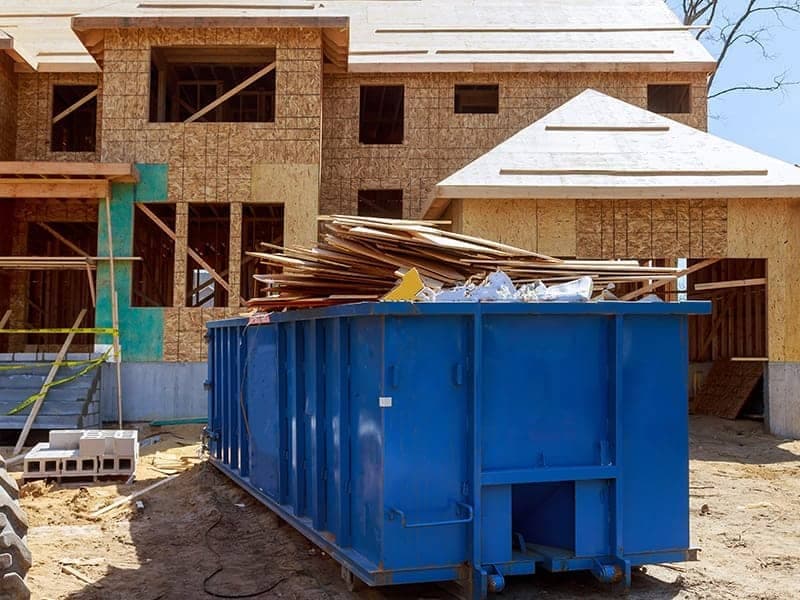
30 Yard Dumpster Rentals.
The 30 yard dumpster is the standard choice for new home construction and large-scale renovation projects. It has the same ground footprint as a 20 yard container but stands 6 feet tall, giving you 50% more capacity. Contractors and homeowners tackling major work choose this size when a 20 yard risks running out of space.
Get quotes from local 30 yard haulers.
Compare prices from independent companies in your ZIP. No broker auctions, no markup.
30 Yard prices in major US cities.
Real survey-sourced 7-day rental prices for the 30 yard in 20 major US metros. Click any city for the full breakdown.
| City | State | 7-day rental |
|---|---|---|
| Houston | TX | $375–$625 |
| New York City | NY | $550–$800 |
| Los Angeles | CA | $525–$725 |
| Chicago | IL | $425–$575 |
| Phoenix | AZ | $375–$525 |
| Philadelphia | PA | $500–$700 |
| Dallas | TX | $450–$650 |
| Atlanta | GA | $425–$575 |
| Miami | FL | $375–$575 |
| Seattle | WA | $375–$750 |
| Denver | CO | $375–$575 |
| Boston | MA | $550–$775 |
| San Francisco | CA | $575–$800 |
| Detroit | MI | $500–$600 |
| Minneapolis | MN | $450–$700 |
| San Diego | CA | $525–$700 |
| Tampa | FL | $425–$575 |
| Orlando | FL | $325–$400 |
| Charlotte | NC | $450–$625 |
| Las Vegas | NV | $375–$575 |
Source: Town Bins cost guide. See our cost guide →
Dimensions & capacity.
Holds 9-12 pickup truck loads
170-190 large (33-gallon) trash bags
About chest-high on most adults (6 feet)
3-4 tons (6,000-8,000 lbs)
Higher weight capacity than smaller sizes. Heavy materials (concrete, brick) may still have lower limits. Overweight fees typically run $40-100 per additional ton.
Weight limits guideWhat fits inside.
Specific material quantities for a 30 yard roll-off, based on standard debris weights and pack density.
| Material | How much fits |
|---|---|
| Pickup truck loads of debris | 9-12 loads |
| Contractor trash bags (33-gallon) | 170-190 bags |
| Drywall sheets (4x8 ft) | 150-200 sheets |
| Roofing shingle squares | 35-40 squares (3,500-4,000 sq ft) |
| Carpet and padding | 2,500-4,000 sq ft |
| Standard 3-seat couches | 8-10 couches |
| 2x4 lumber studs (8 ft) | 300-400 studs |
Weight by material.
Weight limits matter as much as volume. Heavy materials like concrete fill the weight limit long before the container looks full.
| Material | Est. weight | How much fits |
|---|---|---|
| Household junk & furniture | 2-3 tons | Full container |
| Drywall | 3-5 tons | 150-200 sheets (4x8 ft) |
| Roofing shingles (multi-layer) | 3-4 tons | 35-40 squares (3,500-4,000 sq ft) |
| Concrete/brick | 3-4 tons max | Half container (very heavy) |
| Mixed construction debris | 3-4 tons | Full container |
| Lumber/framing wood | 2-3 tons | Full container |
Weights are approximate and vary by density and moisture. Always confirm limits with your hauler.
What it's good for.
- ·New home construction (1,500-2,500 sq ft)
- ·Whole-house renovations (4-6 rooms)
- ·Large roof replacement (3,000+ sq ft or multi-layer)
- ·Major demolition projects (garages, sheds, interior walls)
- ·Complete home cleanouts (2,000-3,000 sq ft)
- ·Large commercial remodels
- ·Multi-room additions (400-800 sq ft)
- ·Garage or shed demolition
- ·Large estate cleanouts
- ·Small single-room projects (too large — try a 10 yard)
- ·Minor cleanouts and basic repairs (try a 10-20 yard)
- ·Small residential renovations
- ·Properties with very limited driveway space
Common projects.
New Home Construction.
The industry standard for new residential builds (1,500-2,500 sq ft). Handles lumber scraps, drywall cutoffs, packaging materials, flooring waste, and general construction debris throughout the build.
Read the guideWhole-House Renovation.
Handles debris from renovating an entire home (4-6 rooms): multiple rooms of drywall, flooring, fixtures, cabinets, doors, trim, and demolition waste.
Read the guideLarge Roof Replacement.
Ideal for roofs 3,000+ sq ft, multi-layer tear-offs, or complex roofs with multiple valleys and dormers. Handles 35-40 squares of shingles.
Read the guideRoom Addition.
Great for major additions: demo work, new construction waste, and all debris from adding 400-800 sq ft to an existing home.
Read the guideFull Estate Cleanout.
Sufficient for clearing a complete single-family home (2,000-3,000 sq ft) after inheritance, downsizing, or estate liquidation.
Read the guideLarge Demolition.
Perfect for demolishing garages (1-2 car), sheds, decks (400+ sq ft), or interior walls during major remodeling projects.
Read the guideCommercial Renovation.
Ideal for small commercial space renovations: retail stores, offices, and restaurants undergoing significant remodeling.
Read the guideMulti-Tree Removal.
Handles removal of 3-5 large trees, extensive land clearing, or major storm cleanup with multiple damaged trees and large branches.
Read the guideWhat it costs.
How long you'll keep it.
New construction projects often negotiate longer rental periods (30+ days) at reduced daily rates. Ask your provider about contractor or project-based pricing.
Size up or down?
to 20 Yard.
Downsize to 20 yard for single-room renovations, standard single-layer roof replacements, or medium cleanouts where volume is predictable. Save $100-150 if you're confident in your estimate.
View 20 Yard detailsto 40 Yard.
Upgrade to 40 yard for complete home demolition, very large commercial projects, or when you absolutely need maximum capacity. The cost difference is only $100-200 for 33% more space.
View 40 Yard detailsBefore the drop-off.
Prep the site so the truck can drop clean — spare the driveway and your neighbors.
- 01Clear a flat area at least 60-70 feet long — same space as a 20 yard but plan for the extra height
- 02Verify 23+ feet of overhead clearance — the taller container requires the truck to tilt higher during placement
- 03Place plywood boards under the contact points to protect driveway or surface from the heavier loaded weight
- 04Ensure the delivery path is clear of vehicles, equipment, and construction materials
- 05For construction sites, coordinate delivery timing with your project schedule to avoid workflow disruptions
- 06Provide clear placement instructions — commercial and construction sites may have specific drop locations
Do you need a permit?
A 30 yard dumpster on private property typically requires no permit. Street placement requires a municipal permit, and construction sites may need additional permits depending on local building codes. At this size, commercial placement often triggers extra permit scrutiny.
No permit required on private property. Construction sites, private lots, and residential driveways (with sufficient space) are typically exempt. The 30 yard container (22' x 7.5' x 6') needs a longer, wider clear area than smaller sizes — confirm fit before delivery.
Street placement requires a municipal permit in almost all jurisdictions. Costs run $40–$125 for a 30 yard container due to the larger footprint and longer expected rental duration. Some cities require traffic control equipment (cones, signs) for large commercial dumpsters placed on active streets.
HOA approval is strongly recommended for 30 yard dumpsters in residential neighborhoods. The 6-foot height and commercial scale may draw more scrutiny than smaller sizes. Provide your HOA with a project timeline, estimated rental duration, and the dumpster placement plan. Most HOAs grant approval for legitimate renovation projects.
$0 on private property or construction sites. $40–$125 for street permits. Commercial zones may require separate building department permits tied to your renovation or construction permit.
Varies by municipality. Confirm with the city's public works office.
- ·If you have a building permit for your renovation, ask if a dumpster permit is included — some jurisdictions bundle them
- ·Construction sites with active permits may exempt dumpsters from separate street use permits
- ·Notify neighbors before placing a 30 yard dumpster — good communication prevents complaints that delay your project
- ·Check whether your city requires the dumpster to be removed on weekends in residential areas
- ·Large containers often require a specific permit type (construction vs. residential) — clarify with your provider
Loading tips.
Use the swinging rear door for heavy and bulky items — the 6-foot height makes tossing over the sides difficult
Create a flat base layer with large, flat debris (drywall, plywood, subflooring)
Break down bulky items before loading to avoid wasted air space
Load heavy materials first and lighter items on top
Never exceed the container rim height — overloaded containers incur fees and cannot be transported
For construction projects, consider daily loading rather than one large push to distribute effort
Never throw in.
These items are prohibited by every major hauler due to environmental regulation or liability. Expect extra fees or refused pickup if they turn up during unload.
Frequently asked.
How big is a 30 yard dumpster?
A 30 yard dumpster is 22 feet long, 7.5 feet wide, and 6 feet high — about chest height on most adults. It holds 30 cubic yards of debris, equivalent to 9-12 pickup truck loads or 170-190 large trash bags. It has the same ground footprint as a 20 yard container but stands 1.5 feet taller.
How much does a 30 yard dumpster cost?
A 30 yard dumpster typically costs $450-$750 depending on location and project type. The national average is about $600 for a 7-14 day rental. This includes delivery, pickup, disposal fees (up to weight limit), and taxes. Contractors on larger projects may negotiate volume discounts.
What can fit in a 30 yard dumpster?
A 30 yard dumpster can hold: complete new home construction debris, whole-house renovation waste (4-6 rooms), large roof tear-off (3,000+ sq ft or multi-layer), full home cleanout (2,000-3,000 sq ft), garage demolition, room addition debris, or commercial renovation waste. It holds about 170-190 large trash bags.
Is a 30 yard dumpster big enough for new construction?
Yes, a 30 yard dumpster is the standard size for new residential home construction (1,500-2,500 sq ft). It handles lumber waste, drywall scraps, packaging, flooring cutoffs, and general construction debris throughout the build. Very large homes (3,000+ sq ft) may need a 40 yard or multiple containers.
Can I use a 30 yard dumpster for a whole house cleanout?
Yes. A 30 yard container handles complete home cleanouts for homes up to 3,000 sq ft. It holds all furniture, appliances, clothing, boxes, and household contents from an average single-family home. Larger estates or homes with heavy accumulation (hoarding situations) may need a 40 yard or multiple rentals.
How many tons can a 30 yard dumpster hold?
A 30 yard dumpster typically has a weight limit of 3-4 tons (6,000-8,000 lbs) for standard construction debris. This is 50% higher than smaller containers. Very heavy materials like concrete, brick, or dirt still have lower weight limits (1-2 tons max) regardless of the volume you have available.
Will a 30 yard dumpster fit in my driveway?
A 30 yard dumpster (22' x 7.5' x 6') fits in most residential driveways — same footprint as a 20 yard, just 1.5 feet taller. You need 60-70 feet for delivery truck access and 24 feet of placement space. Check overhead clearance: the delivery truck needs 23+ feet of vertical clearance to tilt and place the container.
Should I get a 30 yard or 40 yard dumpster?
Choose a 30 yard for most residential projects: new construction, whole-house renovations, large roofs, or full cleanouts. Choose a 40 yard only for exceptionally large projects: major commercial construction, complete home demolition, or very large estates (4,000+ sq ft). The cost difference is $100-200 for 33% more capacity.
Other sizes.
20 Yard.
$350–$600The most popular dumpster size - 20 yard containers are perfect for home renovations, roofing projects, and medium-sized cleanouts.
View the 20 Yard guide40 Yard.
$500–$900Maximum capacity - 40 yard dumpsters for the largest projects including commercial construction, major demolition, and extensive cleanouts.
View the 40 Yard guide