How to Dispose of Concrete (6 Methods)
Concrete disposal options ranked by cost and convenience. Covers dumpster rental, recycling, weight limits, and why concrete costs more to haul.
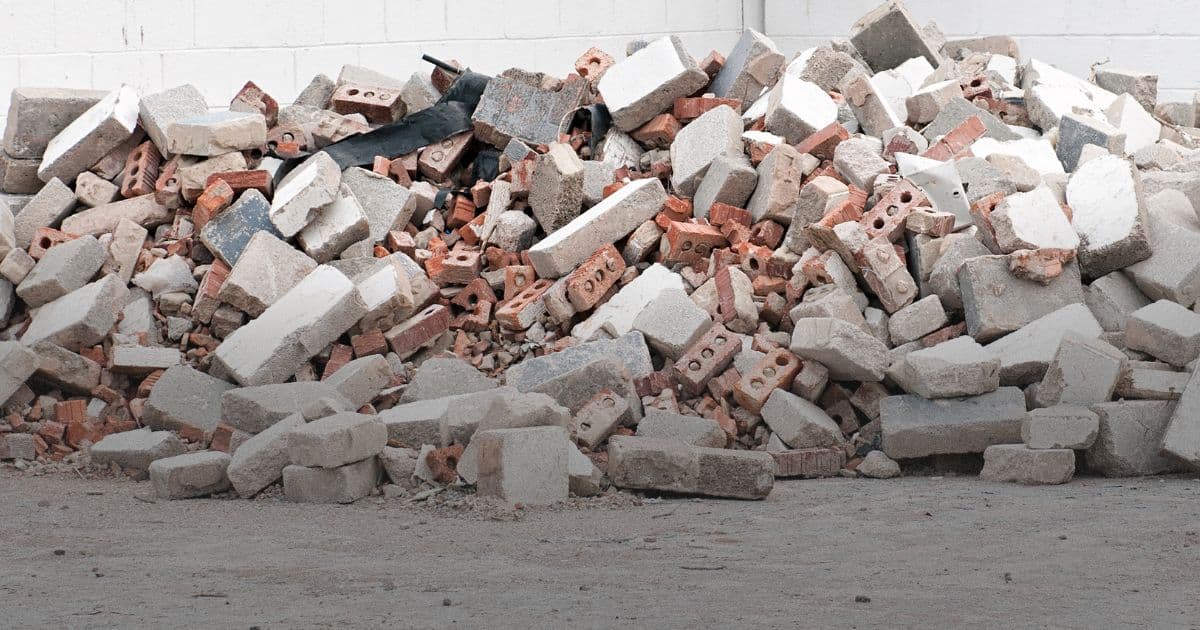
Concrete is one of the heaviest materials you will ever need to dispose of. A single cubic yard of solid concrete weighs roughly 4,050 pounds --- about two tons. That weight changes everything about how you plan removal: the dumpster size you rent, the truck that hauls it, the disposal facility that accepts it, and the final cost you pay. Most people underestimate concrete weight by 50% or more, which leads to overage fees, rejected loads, and wasted time.
This guide breaks down every viable concrete disposal method, compares real costs, explains weight limits that apply to dumpster rentals, and covers recycling options that can cut your disposal bill significantly.
Why Concrete Disposal Is Different from Regular Debris
Standard construction debris --- drywall, wood, carpet --- weighs between 300 and 800 pounds per cubic yard. Concrete weighs 4,050 pounds per cubic yard when solid. Even broken concrete chunks weigh around 2,025 pounds per cubic yard because air gaps reduce density by roughly half.
This density creates three problems:
- Standard dumpsters cannot handle it. A 20-yard dumpster filled with concrete would weigh 40+ tons, far exceeding the 10-ton legal road limit for most roll-off trucks.
- Weight limits are strict. Dumpster companies enforce weight caps and charge $50--$150 per ton for overages.
- Not all facilities accept it. Many municipal landfills charge premium rates for concrete or refuse it entirely, directing you to specialized C&D recycling facilities instead.
Understanding these constraints before you start breaking up a patio, driveway, or foundation saves hundreds of dollars and multiple trips.
6 Ways to Dispose of Concrete
1. Rent a Heavy Debris Dumpster (Best for Large Projects)
A heavy debris dumpster --- sometimes called a concrete dumpster or inert dumpster --- is a 10-yard container specifically rated for dense materials like concrete, brick, block, and asphalt. These smaller containers hold up to 10 tons despite their compact footprint.
Why this works best for most projects:
- Load at your own pace over a 7--14 day rental period
- No need to transport material yourself
- The hauler handles delivery, pickup, and disposal
- Flat-rate pricing means no surprises
Cost: $300--$800 depending on your location. The national average sits around $536 for a 10-yard heavy debris dumpster. Use our search tool to find providers near you, or check local dumpster rental companies for competitive quotes.
Weight math you need to know:
| Concrete Type | Weight per Cubic Yard | Max Cubic Yards in 10-Yard Dumpster |
|---|---|---|
| Solid slab pieces | 4,050 lbs (~2 tons) | ~5 cubic yards (10 tons) |
| Broken chunks | 2,025 lbs (~1 ton) | ~10 cubic yards (10 tons) |
| Mixed concrete + rebar | 2,500 lbs (~1.25 tons) | ~8 cubic yards (10 tons) |
| Concrete block/CMU | 1,800 lbs (~0.9 tons) | ~10 cubic yards (9 tons) |
A 10-yard dumpster physically holds 10 cubic yards of volume, but with concrete you will hit the weight limit before filling the container. Plan for roughly 5 cubic yards of solid slab or 8--10 cubic yards of broken pieces.
Important: Most companies require concrete-only loads. Mixing household trash, wood, or other debris with concrete either triggers contaminated-load fees or gets your load rejected at the recycling facility. Keep materials separated. If you have mixed construction debris, rent a second container.
2. Recycle Concrete at a C&D Facility (Cheapest Option)
Construction and demolition (C&D) recycling facilities crush concrete into aggregate that gets reused in road base, new concrete mixes, drainage fill, and landscaping. Recycling is almost always cheaper than landfill disposal because the facility profits from selling the processed aggregate.
Cost: Recycling concrete costs approximately $7.50 per ton at dedicated facilities, compared to $51--$100+ per ton at landfills. That is a 7--13x cost difference.
Requirements for recycling acceptance:
- Concrete must be "clean" --- no trash, wood, drywall, or household waste mixed in
- Rebar is usually acceptable but must be noted when scheduling
- No painted or coated concrete (some facilities reject this)
- No concrete contaminated with oils, chemicals, or hazardous materials
To find a recycling facility near you, search the Construction & Demolition Recycling Association (CDRA) database or call your county solid waste department. Many city waste management programs maintain lists of approved recycling centers.
3. List It Free on Online Marketplaces
Broken concrete has genuine value to landscapers, contractors, and DIYers. People use concrete chunks for:
- Retaining wall fill
- French drain beds
- Raised garden bed borders
- Erosion control
- Driveway base material
- Backfill for fence posts
Post on Craigslist (Free section), Facebook Marketplace, or Nextdoor with photos and a description of quantity and piece sizes. Specify "you haul" to avoid any transport costs on your end.
Cost: Free. The only investment is 10 minutes to post the listing and the time waiting for someone to pick it up, which can range from hours to weeks depending on demand in your area.
4. Donate to Habitat for Humanity or Landscapers
Habitat for Humanity ReStore locations accept building materials including clean concrete in some markets. Landscaping companies regularly need aggregate and fill material. Call local landscapers directly --- many will pick up clean concrete for free because they would otherwise pay for equivalent material.
Cost: Free, and you may receive a tax-deductible donation receipt from qualifying nonprofits.
5. Haul It to a Landfill Yourself (DIY Option)
If you own or can rent a truck or heavy-duty trailer, self-hauling to a landfill or transfer station is straightforward.
Cost: $51--$100+ per ton at most landfills. A single truckload of broken concrete (roughly 1--2 tons in a pickup with a trailer) costs $50--$200.
Drawbacks:
- You need a vehicle rated for the weight (concrete destroys standard truck suspensions)
- Multiple trips for larger projects
- Landfill fees are significantly higher than recycling facility fees
- Physical labor of loading and unloading
This option makes sense only for small quantities --- a few hundred pounds from a minor repair. For anything larger, a dumpster rental or recycling drop-off is more cost-effective.
6. Hire a Junk Removal Service
Junk removal companies load and haul debris for you, charging by volume or truckload.
Cost: $100--$800 per truckload depending on quantity and your location. Concrete loads often fall at the higher end because of weight surcharges.
When this makes sense: You have a small amount of concrete (under 1 ton), need same-day removal, or physically cannot load a dumpster yourself. For anything over a ton, a dumpster rental is almost always cheaper.
Cost Comparison: All Concrete Disposal Methods
| Method | Cost Range | Best For | Limitations |
|---|---|---|---|
| Heavy debris dumpster | $300--$800 | Large projects (driveways, patios, foundations) | Must keep loads clean; 10-ton weight limit |
| C&D recycling facility | $7.50/ton (~$15--$75 total) | Any quantity of clean concrete | Must self-haul; no contaminated loads |
| Online listing (free) | $0 | Small to medium quantities | Unpredictable pickup timeline |
| Donation | $0 | Clean, usable pieces | Limited acceptance; must call ahead |
| Landfill self-haul | $51--$100/ton | Small quantities only | Expensive; requires heavy-duty vehicle |
| Junk removal | $100--$800/load | Small quantities; same-day need | Weight surcharges; most expensive per ton |
How to Estimate Your Concrete Weight
Accurate weight estimates prevent overage fees and help you choose the right disposal method. Use this formula:
Length (ft) x Width (ft) x Thickness (ft) / 27 = Cubic Yards
Then multiply cubic yards by the weight per cubic yard:
| Project | Typical Dimensions | Estimated Weight |
|---|---|---|
| Sidewalk section (4 ft x 20 ft x 4 in) | 0.99 cu yd | ~4,000 lbs (2 tons) |
| Patio slab (10 ft x 12 ft x 4 in) | 1.48 cu yd | ~6,000 lbs (3 tons) |
| Single-car driveway (10 ft x 20 ft x 5 in) | 3.09 cu yd | ~12,500 lbs (6.25 tons) |
| Two-car driveway (20 ft x 20 ft x 5 in) | 6.17 cu yd | ~25,000 lbs (12.5 tons) |
| Basement floor (20 ft x 30 ft x 4 in) | 7.41 cu yd | ~30,000 lbs (15 tons) |
A two-car driveway at 12.5 tons exceeds a single 10-ton dumpster. You would need two loads or a dumpster swap (where the company picks up the full container and drops an empty one). Factor swap fees ($100--$200) into your budget.
For detailed weight guidance across all debris types, see our dumpster weight limits guide.
Concrete Recycling: What Happens to Your Old Concrete
Understanding the recycling process helps explain why facilities charge so much less than landfills:
- Intake and inspection --- Facility staff check loads for contamination (trash, hazardous material, excessive rebar)
- Primary crushing --- Jaw crushers break large pieces into 6--8 inch chunks
- Magnetic separation --- Electromagnets pull out rebar and metal reinforcement
- Secondary crushing --- Impact crushers reduce material to specified aggregate sizes
- Screening --- Vibrating screens sort crushed material by particle size
- Quality testing --- Samples are tested for compressive strength and contaminant levels
The resulting recycled concrete aggregate (RCA) sells for $6--$14 per ton and is used in:
- Road base and sub-base (largest market)
- New concrete production (up to 30% replacement of virgin aggregate)
- Pipe bedding and backfill
- Erosion control riprap
- Drainage layer material
- Landscape aggregate
Because facilities profit from selling RCA, they charge far less to accept your concrete than a landfill that simply buries it. The EPA reports that over 95% of clean concrete is successfully recycled --- the highest recycling rate of any construction material.
Common Mistakes That Increase Concrete Disposal Costs
Mixing Concrete with Other Materials
Contaminated loads get rejected at recycling facilities or incur sorting fees of $150--$500. Keep concrete separate from wood, drywall, roofing, and household debris. If your home renovation project generates mixed waste, rent separate containers.
Underestimating Weight
The most common mistake is ordering a 20-yard dumpster or 30-yard dumpster for concrete. These larger containers are designed for lighter materials. Filling them with concrete creates loads of 20--40 tons that no standard truck can legally haul. Always use a 10-yard heavy debris dumpster for concrete.
Skipping the Recycling Option
Landfill disposal costs 7--13x more than recycling. Even if the recycling facility is farther away, the per-ton savings almost always justify the extra distance. Ask your dumpster rental provider where they take concrete --- companies that use recycling facilities typically pass those savings on to you.
Not Removing Attachments
Concrete with embedded fixtures (plumbing, electrical conduit, insulation) may be rejected at recycling facilities. Remove attachments before loading. Rebar is generally acceptable --- ask the facility about their specific requirements.
Dumpster Sizing for Common Concrete Projects
| Project Type | Recommended Dumpster | Estimated Loads | Total Cost Estimate |
|---|---|---|---|
| Small patio removal | 10-yard heavy debris | 1 load | $300--$500 |
| Sidewalk replacement | 10-yard heavy debris | 1 load | $350--$550 |
| Single driveway removal | 10-yard heavy debris | 1--2 loads | $400--$800 |
| Two-car driveway removal | 10-yard heavy debris | 2 loads | $600--$1,200 |
| Pool demolition (concrete) | 10-yard heavy debris | 2--4 loads | $800--$2,400 |
| Foundation removal | 10-yard heavy debris | 3--5 loads | $900--$3,000 |
For projects generating mixed concrete and lighter debris, consider renting two containers: a heavy debris dumpster for concrete and a standard 20-yard or 30-yard dumpster for everything else. See our dumpster size guide for help choosing the right container for non-concrete materials.
Permits and Regulations
Most municipalities do not require a special permit to dispose of concrete, but you may need a permit to place a dumpster on a public street or right-of-way. Permit requirements vary by city --- check our dumpster permit guide for state-specific details.
If your concrete removal involves demolition of a structure built before 1978, federal regulations require testing for asbestos-containing materials before demolition begins. Asbestos was commonly added to concrete, morite, and stucco. If present, a licensed abatement contractor must handle removal.
Frequently Asked Questions
Can I put concrete in a regular dumpster?
No. Standard dumpsters have weight limits of 2--4 tons, which a few cubic yards of concrete will easily exceed. You need a heavy debris or concrete-specific dumpster rated for up to 10 tons. Find a provider near you that offers heavy debris containers.
How much does it cost to dispose of a concrete driveway?
A standard single-car driveway (10 ft x 20 ft x 5 in) weighs approximately 6 tons. A 10-yard heavy debris dumpster to haul this costs $350--$600 in most markets. Breaking up and loading the concrete yourself keeps costs at the lower end. Hiring labor for demolition and loading adds $500--$1,500 depending on access and complexity.
Can concrete be recycled?
Yes. Over 95% of clean concrete is recyclable. C&D recycling facilities crush it into aggregate for road base, new concrete, and landscaping. Recycling typically costs $7.50 per ton compared to $51--$100+ per ton at landfills. Call your local facility to confirm acceptance requirements.
How do I break up concrete for disposal?
For slabs under 4 inches thick, a 12-pound sledgehammer works. For thicker slabs, rent an electric jackhammer ($50--$100/day) or a skid-steer with a hydraulic breaker ($250--$400/day). Score control joints first to direct cracking. Break pieces to 12--18 inches maximum for easier loading and better dumpster packing density.
What cannot go in a concrete dumpster?
Concrete-only dumpsters accept concrete, brick, block, and stone. They do not accept wood, drywall, roofing, household trash, dirt, asphalt (unless specified), or any prohibited items. Mixing materials results in contaminated-load surcharges or load rejection.
Is asphalt disposed of the same way as concrete?
Asphalt recycling is even cheaper than concrete recycling (approximately $6.70 per ton). Many facilities accept both, but they must be separated. Never mix asphalt and concrete in the same dumpster unless your hauler confirms the receiving facility accepts mixed loads.
Next Steps
- Estimate your concrete weight using the dimension tables above
- Find local disposal options --- search for dumpster rental companies in your area
- Request quotes from 2--3 providers and confirm they offer heavy debris dumpsters
- Ask where the concrete goes --- providers using recycling facilities usually offer lower rates
- Check permit requirements if the dumpster will sit on a public street
For broader project waste planning, review our guides on estimating debris volume, dumpster rental costs, and construction site waste management. You can also browse our industry statistics for average disposal costs by region.
Find a hauler in your ZIP.
Browse verified dumpster rental companies in your area — ratings, reviews, and pricing in one place.
Search local providersRelated articles.
How to Dispose of Construction Debris
Complete guide to construction debris disposal. Covers C&D waste types, dumpster sizing, recycling requirements, hazardous materials, and permit needs.
ReadHow to Dispose of a Mattress (7 Options)
Mattress disposal methods, recycling laws by state, and cost comparison. Covers dumpster rental, retailer take-back, and free recycling programs.
Read