How to Dispose of Construction Debris
Complete guide to construction debris disposal. Covers C&D waste types, dumpster sizing, recycling requirements, hazardous materials, and permit needs.
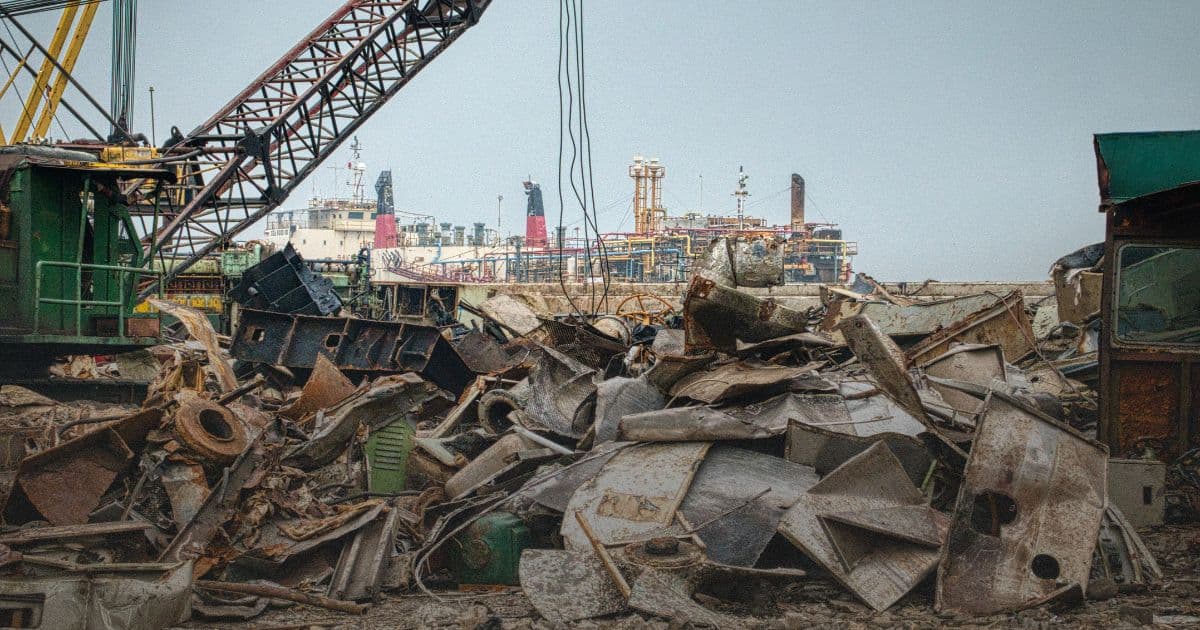
The U.S. construction industry generates roughly 600 million tons of construction and demolition (C&D) debris annually --- more than twice the amount of all municipal solid waste combined. Whether you are tearing out a bathroom, demolishing a garage, or managing a full-scale renovation, understanding what qualifies as C&D waste, where it can legally go, and how to minimize disposal costs directly impacts your project budget and timeline.
This guide covers every category of construction debris, explains the dumpster sizes and types you need for each, breaks down recycling requirements that can cut costs by 50% or more, addresses hazardous materials that require special handling, and clarifies permit requirements that vary by city and state.
What Qualifies as Construction and Demolition Debris
The EPA defines C&D debris as materials generated during construction, renovation, repair, and demolition of buildings, roads, and other structures. The category is broad and splits into two critical subcategories that affect how you dispose of it and what you pay.
Clean Debris (Lower Disposal Cost)
Clean debris consists of a single material type, free from contamination. Keeping materials separated qualifies them as clean and significantly reduces disposal costs.
| Material | Weight per Cubic Yard | Recyclable? | Typical Disposal Cost |
|---|---|---|---|
| Concrete | 4,050 lbs (solid) | Yes --- over 95% rate | $7.50/ton recycling; $51--$100/ton landfill |
| Asphalt | 3,600 lbs | Yes --- over 95% rate | $6.70/ton recycling |
| Wood (untreated) | 300--500 lbs | Yes | $60--$100/ton |
| Metal (steel, aluminum) | 800--2,000 lbs | Yes --- over 90% rate | Free (scrap value) |
| Brick | 3,000 lbs | Yes | $90--$150/ton |
| Drywall (clean) | 500 lbs | Yes (gypsum recycling) | $40--$80/ton |
| Cardboard packaging | 100--150 lbs | Yes | Free (recycling programs) |
Mixed/Dirty Debris (Higher Disposal Cost)
Mixed debris contains multiple material types in the same container. This is the reality for most renovation and demolition projects --- a single dumpster often contains drywall, wood, roofing, metal, and miscellaneous materials together.
Cost impact: Mixed C&D waste costs $150--$250 per ton at transfer stations and landfills, compared to $40--$100 per ton for clean, separated loads. That is a 2--3x premium for not separating materials.
Why the cost difference exists: Clean loads go directly to material-specific recyclers who pay for the material or charge minimal fees. Mixed loads require sorting at a transfer station before recyclable materials can be extracted, and that sorting labor gets passed on to you.
What Is NOT C&D Debris
These materials require separate disposal pathways and cannot go in a standard construction dumpster:
- Asbestos-containing materials (requires licensed abatement and separate disposal)
- Lead-based paint debris (from pre-1978 buildings)
- Treated lumber (CCA-treated wood contains arsenic)
- Chemicals (adhesives, solvents, sealants, paint)
- Appliances with refrigerant (EPA-regulated; see our appliance disposal guide)
- Electronics and fixtures with mercury (fluorescent tubes, thermostats)
- Soil contaminated with petroleum or chemicals
For a comprehensive list of restricted materials, see our prohibited dumpster items guide.
Dumpster Sizing for Construction Debris
Choosing the right dumpster size prevents costly overage fees and unnecessary swap-outs. Construction debris is denser than household junk, so weight limits matter as much as volume.
Size Selection Guide by Project
| Project Type | Recommended Size | Estimated Weight | Estimated Loads | Cost Range |
|---|---|---|---|---|
| Bathroom remodel | 10-yard | 1,500--3,000 lbs | 1 | $250--$450 |
| Kitchen remodel | 20-yard | 3,000--6,000 lbs | 1 | $300--$550 |
| Single-room addition | 20-yard | 4,000--8,000 lbs | 1--2 | $300--$700 |
| Whole-house renovation | 30-yard | 5,000--10,000 lbs | 1--2 | $350--$750 |
| Garage demolition | 30-yard or 40-yard | 6,000--15,000 lbs | 1--3 | $400--$1,000 |
| Small commercial buildout | 40-yard | 8,000--20,000 lbs | 2--4 | $450--$1,200 |
| Full demolition | Multiple 40-yard | 15,000+ lbs | 3+ | $1,000+ |
Weight Limits and Heavy Materials
Standard dumpsters have weight limits of 2--6 tons depending on size and provider. Heavy materials like concrete, brick, dirt, and roofing shingles hit these limits fast.
Rule of thumb: If your project generates significant quantities of heavy materials, rent a separate heavy debris dumpster (10-yard rated for 10 tons) for the dense stuff and a standard dumpster for lighter mixed debris. This separation also reduces costs by qualifying the heavy load for recycling rates.
For detailed guidance on concrete disposal specifically, see our concrete disposal guide.
For help estimating how much debris your project will generate, use our debris volume estimation guide.
How to Reduce Construction Debris Disposal Costs
1. Separate Materials on Site
The single most effective cost-reduction strategy is source separation. Set up designated areas or containers for:
- Metals (steel studs, copper pipe, aluminum flashing) --- scrap metal has positive value
- Clean wood (framing lumber, plywood, trim) --- cheaper disposal and often recyclable
- Concrete/masonry (block, brick, concrete) --- recyclable at 7--13x less than landfill rates
- Drywall (gypsum board) --- recyclable at dedicated facilities
- Cardboard (packaging from new materials) --- free recycling everywhere
- Everything else (mixed debris) --- this is your most expensive category
Even partial separation makes a difference. Pulling metals out of your mixed debris reduces weight and earns scrap revenue. Keeping concrete separate qualifies it for recycling at $7.50/ton versus $150+/ton mixed.
2. Reuse Materials Where Possible
Before demolishing, evaluate what can be salvaged:
- Doors and windows --- donate to Habitat for Humanity ReStore or sell online
- Cabinetry --- kitchen and bathroom cabinets in good condition have resale value
- Hardwood flooring --- salvaged hardwood sells for $2--$8 per square foot
- Dimensional lumber --- clean, straight 2x4s and 2x6s can be reused
- Fixtures --- sinks, tubs, light fixtures, and hardware all have donation or resale value
- Brick --- reclaimed brick sells for $0.50--$1.50 per brick
Deconstruction (careful disassembly to preserve materials) takes longer than demolition but can offset disposal costs through material recovery. Some nonprofit deconstruction services offer free labor in exchange for the salvaged materials.
3. Right-Size Your Dumpster
Ordering a dumpster that is too large wastes money on unused capacity. Ordering one that is too small forces a swap or second delivery at $100--$200 per occurrence. Use the project sizing table above and when in doubt, size up one increment --- the cost difference between sizes is typically $50--$100, while a swap costs twice that.
See our dumpster size guide for detailed comparisons and our dumpster rental cost breakdown for pricing by size and region.
4. Negotiate Rental Period
Standard rental periods range from 7--14 days. If your project timeline is longer, negotiate an extended rental upfront rather than paying daily overage fees ($5--$15/day). Many providers offer 30-day rentals for an additional flat fee that is significantly cheaper than per-day charges.
Hazardous Materials in Construction Debris
Three categories of hazardous materials commonly appear in construction and demolition projects. Federal and state regulations require specific handling, and placing these materials in a standard dumpster violates environmental law.
Asbestos
Asbestos was used extensively in construction from the 1920s through the 1980s. Common locations include:
- Floor tiles (9"x9" vinyl tiles are a common indicator)
- Pipe insulation and boiler wrapping
- Popcorn/textured ceiling coatings (pre-1980)
- Roof shingles and siding (cement-asbestos products)
- Drywall joint compound (some brands through early 1980s)
- Vermiculite insulation (particularly Zonolite brand)
Legal requirements:
- Buildings constructed before 1980 must be inspected for asbestos before renovation or demolition (NESHAP regulation)
- Only licensed asbestos abatement contractors can remove asbestos-containing materials
- Asbestos waste must be double-bagged in labeled, sealed bags
- Transport requires a licensed hazardous waste hauler
- Disposal is limited to approved asbestos landfills
- Cost: Asbestos abatement costs $1,500--$30,000+ depending on scope. Disposal fees for asbestos waste run $50--$100+ per cubic yard.
- Fines for improper handling range from $10,000 to $70,000+ per violation
Lead-Based Paint
Any building constructed before 1978 may contain lead-based paint. The EPA's Lead Renovation, Repair, and Painting (RRP) Rule requires:
- Contractors must be EPA-certified to work on pre-1978 homes
- Lead-safe work practices must be followed during renovation
- Waste containment and cleanup protocols are mandated
- Waste testing determines disposal pathway
Disposal rules: Residential lead-based paint waste from renovation (paint chips, dust, and contaminated building components) can generally be disposed of as regular construction waste under EPA's household waste exemption. However, large-scale demolition debris with lead paint may require testing, and several states have stricter rules than the federal standard. Always check your state environmental agency's requirements.
Silica Dust
Cutting, grinding, or demolishing concrete, brick, stone, or tile generates crystalline silica dust --- a known carcinogen. OSHA's silica standard (29 CFR 1926.1153) requires:
- Dust control measures (wet cutting, vacuum systems) during operations
- Exposure monitoring on construction sites
- Medical surveillance for workers with repeated exposure
- Respiratory protection when dust levels exceed permissible exposure limits
Silica dust does not affect debris disposal directly (the debris itself is non-hazardous), but work practices during demolition must comply with OSHA requirements.
C&D Waste Recycling: What Gets Recycled and Where
Construction debris recycling has grown significantly. The EPA reports a 76% recovery rate for C&D materials nationally. Understanding what is recyclable and where to take it reduces costs and meets increasingly common green building requirements.
Recycling Rates by Material
| Material | National Recycling Rate | Where It Goes | End Product |
|---|---|---|---|
| Concrete | Over 95% | C&D recycling facilities | Road base, new aggregate, fill |
| Asphalt | Over 95% | Asphalt plants | New asphalt paving |
| Steel/metals | Over 90% | Scrap metal yards | New steel products |
| Wood | 30--40% | Biomass facilities, mulch plants | Mulch, fuel, particle board |
| Drywall | 15--25% | Gypsum recyclers | New drywall, soil amendment |
| Asphalt shingles | 10--20% | Shingle recyclers | Road paving material |
| Brick | 50--60% | Masonry recyclers | Reclaimed brick, aggregate |
How to Find C&D Recycling Facilities
- CDRA database --- The Construction & Demolition Recycling Association maintains a directory of recycling facilities at cdrecycling.org
- County solid waste office --- Your local government maintains lists of licensed C&D facilities
- Dumpster rental provider --- Ask your hauler where they take debris. Providers using recycling facilities typically offer lower rates because facility tipping fees are lower.
- State environmental agency --- Most states license C&D processing facilities and maintain public databases
Many dumpster rental companies offer sorting and recycling as part of their service. When searching for providers, ask specifically about their recycling capabilities and whether separated loads receive lower rates.
Permits for Construction Debris Disposal
Dumpster Placement Permits
Placing a dumpster on a public street, sidewalk, or right-of-way typically requires a permit from your city. Placement on your own private property (driveway, yard) usually does not.
Permit costs: $25--$200+ depending on your city and the duration of placement. Some cities offer 7-day, 14-day, or 30-day permits.
Application timeline: Allow 3--10 business days for permit approval. Some cities offer expedited processing for an additional fee.
For state-specific permit details, see our dumpster permit requirements guide.
Construction and Demolition Permits
Separate from dumpster placement permits, most construction and demolition projects require building permits that include waste management provisions:
- Renovation permits may require a waste management plan showing how debris will be handled
- Demolition permits typically require asbestos inspection reports before issuance
- Green building codes (adopted by many cities) may mandate minimum recycling rates for C&D debris --- typically 50--75% diversion from landfill
OSHA Requirements for Jobsite Waste
On commercial or multi-trade construction sites, OSHA regulations govern debris management:
- Clear walkways and work areas (29 CFR 1926.25)
- Fire prevention through proper waste storage (29 CFR 1926.151)
- Hazardous waste identification and separation (29 CFR 1926.1101 for asbestos)
- Violations carry fines up to $16,131 for serious violations and $161,323 for willful violations
Construction Debris Disposal Checklist
Use this checklist before starting any renovation or demolition project:
Before work begins:
- Determine building age (pre-1978 for lead paint risk, pre-1980 for asbestos risk)
- Schedule asbestos inspection if building is pre-1980
- Obtain building/demolition permits
- Order dumpster(s) --- separate containers for heavy and mixed debris
- Check dumpster placement permit requirements
- Set up material separation areas on site
During the project:
- Separate recyclable materials (metals, clean wood, concrete, cardboard)
- Keep hazardous materials isolated (do not mix with regular debris)
- Monitor dumpster fill level --- schedule swap before overflow
- Follow dust control protocols for concrete and masonry work
- Document waste quantities for permit compliance
At project completion:
- Schedule final dumpster pickup
- Ensure all hazardous materials are properly documented and disposed of
- Obtain disposal receipts for permit close-out
- Calculate actual diversion rate for green building compliance
Frequently Asked Questions
What is the cheapest way to dispose of construction debris?
Separating materials and recycling individually is the cheapest approach. Clean concrete recycles at $7.50/ton versus $150+/ton mixed disposal. Scrap metal has positive value. A dumpster rental for mixed remaining debris costs $250--$750 depending on size. See our full dumpster rental cost guide for pricing details.
Can I put construction debris in a regular dumpster?
Yes, most roll-off dumpster companies accept mixed construction debris. However, you cannot include hazardous materials (asbestos, chemical containers, refrigerant appliances) or certain heavy materials beyond the weight limit. Always confirm accepted materials with your provider when ordering. Search for providers in your area.
How much does it cost to dispose of construction debris?
Costs vary by material and method. Mixed C&D debris at a landfill costs $150--$250/ton. Recycling clean concrete costs $7.50/ton. A dumpster rental for a typical renovation runs $300--$750. Hazardous material disposal (asbestos, lead) costs $1,500--$30,000+ depending on scope. Check city-specific pricing data for your market.
Do I need a permit to put a dumpster in my driveway?
Usually no. Most cities allow dumpster placement on private property (driveway, yard) without a permit. Placement on a public street, sidewalk, or alley typically requires a permit ($25--$200). Check our permit guide for your state's requirements.
What construction materials cannot go in a dumpster?
Asbestos-containing materials, chemical containers, refrigerant appliances, tires, batteries, flammable liquids, and contaminated soil are prohibited in standard construction dumpsters. See our full prohibited items list for details on each.
How do I know if my renovation project has asbestos?
Buildings constructed before 1980 are most likely to contain asbestos. The only way to confirm is professional testing --- a certified asbestos inspector takes samples and sends them to a lab. Visual identification is unreliable. Testing costs $200--$800 depending on the number of samples. This investment is mandatory before demolition and protects you from fines up to $70,000 per violation.
Next Steps
- Assess your project scope using the sizing table above
- Check for hazardous materials if your building is pre-1980
- Plan material separation to reduce disposal costs
- Find a dumpster provider --- search local companies or browse providers near you
- Obtain necessary permits before work begins
For project-specific dumpster guidance, see our guides on construction site waste management, home renovation debris, roofing projects, and yard waste removal. Explore our industry statistics for national C&D waste data and trends, and review the best cities for dumpster service to compare provider density in your area.
Find a hauler in your ZIP.
Browse verified dumpster rental companies in your area — ratings, reviews, and pricing in one place.
Search local providersRelated articles.
How to Dispose of a Mattress (7 Options)
Mattress disposal methods, recycling laws by state, and cost comparison. Covers dumpster rental, retailer take-back, and free recycling programs.
ReadHow to Dispose of Furniture (6 Methods)
Get rid of old furniture the right way. Compares dumpster rental, donation, junk removal, and curbside pickup by cost, speed, and convenience.
Read