What Size Dumpster for Deck Removal?
Deck removal dumpster sizing: 10-yard for decks under 200 sq ft, 20-yard for larger. Sizing by square footage, material type, and concrete footings.
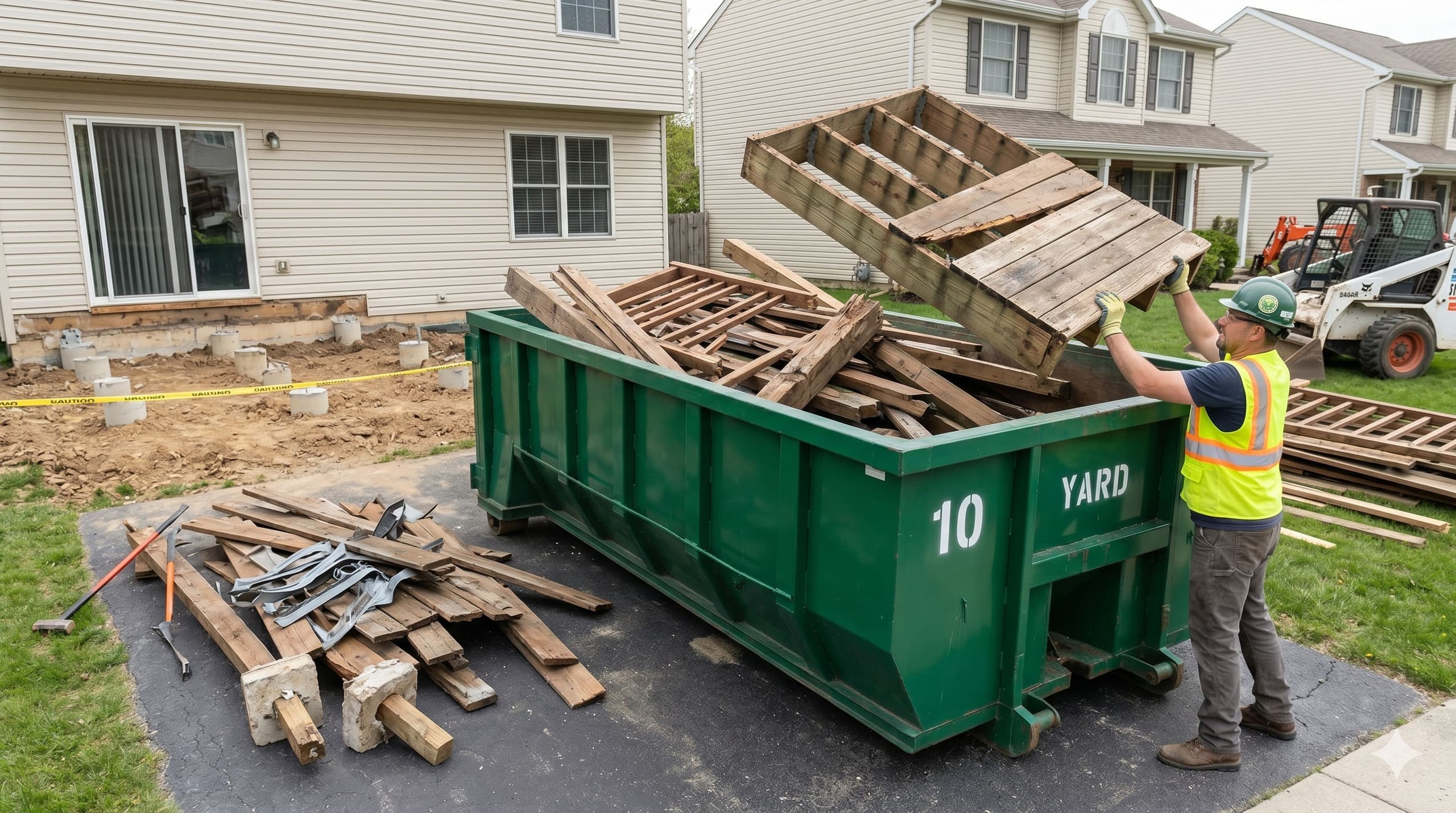
Deck removal is a volume-friendly project — wood is relatively light compared to tile or concrete — which means a smaller dumpster handles more than you might expect. The main variables are deck square footage, the number of material layers (decking boards, joists, beams, ledger board, posts), and whether you are removing concrete footings.
Quick answer: A deck under 200 square feet fits in a 10-yard dumpster. A deck between 200–400 square feet needs a 20-yard. For decks over 400 square feet or any project involving significant concrete removal, go with a 20-yard and discuss weight limits with your provider.
Deck Size vs. Dumpster Size
| Deck Size | Dumpster Size | Estimated Debris |
|---|---|---|
| Under 200 sq ft | 10 yard | 3–5 cubic yards, ~800–1,200 lbs |
| 200–300 sq ft | 10–20 yard | 5–7 cubic yards, ~1,200–1,800 lbs |
| 300–500 sq ft | 20 yard | 7–10 cubic yards, ~1,800–2,800 lbs |
| 500+ sq ft | 20–30 yard | 10–15+ cubic yards, 2,800+ lbs |
| Multi-level deck | 30 yard | 12–20 cubic yards |
| Deck + concrete footings | Add 1 size up | Concrete hits weight limits fast |
What a Deck Actually Weighs
Wood is light relative to tile, brick, or concrete. A typical pressure-treated deck generates roughly 2–4 lbs of debris per square foot of deck surface — less than most homeowners expect.
| Material | Weight per Square Foot |
|---|---|
| Pressure-treated decking boards (2x6) | 2–3 lbs |
| Composite decking (Trex, etc.) | 2–4 lbs |
| Framing lumber (joists + beams) | 2–3 lbs |
| Cedar or redwood decking | 1.5–2.5 lbs |
| Railing system (composite + posts) | 0.5–1 lb |
For a 300 sq ft deck with all wood components, total weight runs approximately 600–1,200 lbs. Well within the 2-ton weight limit of a 10-yard container.
The 20-yard makes sense for larger decks not because of weight, but because of volume. A 500 sq ft deck generates 10–13 cubic yards of debris — too much for a 10-yard's 10 cubic yard capacity.
The Concrete Problem
Concrete footings change the math significantly. A typical deck footing is 12 inches in diameter and 42 inches deep (below frost line in northern climates). Each footing weighs 200–400 lbs.
| Footing Count | Approximate Weight |
|---|---|
| 4 footings (small deck) | 800–1,600 lbs |
| 6 footings (medium deck) | 1,200–2,400 lbs |
| 8+ footings (large deck) | 1,600–3,200+ lbs |
Combined with the wood debris, a large deck with 8+ footings can approach the weight limit of a 10-yard container. In that case:
- Step up to a 20-yard, which typically allows 3–4 tons
- Ask specifically about the weight limit when booking — some 10-yard containers have 2-ton limits, others allow up to 3 tons
- Alternatively, remove concrete separately via a concrete removal specialist (breakout and haul can be cheaper than overage fees)
Note: Concrete removal creates specific debris handling considerations. Many haulers accept broken concrete in small quantities mixed with C&D debris. Very large quantities of concrete may need a separate "clean concrete" container at a lower price because concrete can be recycled without sorting.
Composite vs. Wood Decking
Composite decking (Trex, TimberTech, Fiberon) has become the dominant material for new decks. It presents some different disposal considerations than traditional wood:
Composite decking in dumpsters: Most haulers accept composite decking as standard C&D debris. The material is heavier than wood (2–4 lbs per sq ft vs. 1.5–3 lbs for wood) but not dramatically so.
Recycling composite decking: Some composite manufacturers have take-back programs. Trex's recycling program accepts clean composite decking at certain collection points. If your composite is in good condition but just outdated, check whether your hauler or manufacturer can route it to a recycling facility rather than landfill.
Treated wood in dumpsters: Standard pressure-treated lumber (CCA treated before 2004 or ACQ/CA treated after) is accepted in most dumpsters. Older pressure-treated lumber from decks built before 2004 may contain arsenic-based preservatives (CCA) — confirm with your hauler whether they have any restrictions.
Loading a Deck Demolition Efficiently
Deck demo generates long, awkward pieces. Getting them into the dumpster efficiently matters for maximizing container space:
-
Cut boards to manageable lengths. Cut decking boards to 4-foot lengths with a circular saw or reciprocating saw. They stack flat and fill the container much more efficiently than 12-foot boards standing at angles.
-
Separate framing from decking. Joists and beams are heavier and bulkier. Cut them to 4-foot lengths as well. Lay them flat in layers.
-
Concrete last. If removing footings, load concrete last on top of lighter wood debris. The weight settles the load and prevents concrete chunks from crushing lighter materials.
-
Disassemble railings. Railing systems often take up more volume standing up than they do when disassembled flat. Remove balusters from the rail before loading.
-
Hardware and metal. Screws, joist hangers, post bases, and other metal hardware can go in the dumpster. If you have significant quantities of metal hardware, a metal recycler may take it for free or pay a small amount per pound.
For general loading tips, see our dumpster loading guide.
DIY vs. Contractor Deck Removal
DIY deck removal is common and achievable for most homeowners with basic tools — a circular saw, reciprocating saw, and pry bar handle most wood deck tearouts. A standard 200–300 sq ft deck takes 1–2 days with 2 people.
Contractor teardown makes sense for:
- Multi-level decks with significant height
- Decks attached to the second floor or above
- Decks with extensive rot (structural instability)
- Concrete encapsulated posts that require excavation equipment
- Projects where you want demolition and new deck construction bundled
If a contractor handles the tearout, clarify whether the dumpster is included in their quote or whether you should order separately. Contractor-included dumpsters typically carry a 10–20% markup. Ordering your own can save $50–$150 on a typical deck project.
Combine With Other Projects
A deck removal dumpster is a good anchor point for combining other cleanout work. Since decking debris is relatively light, you often have significant weight capacity remaining after loading the deck. Consider combining with:
- Fence removal — Wood privacy fence generates 1–3 cubic yards per 50 linear feet
- Yard waste — Branches, shrubs, and garden debris from the surrounding area
- Garage cleanout items — Lightweight household items that have been waiting for a disposal opportunity
- Old patio furniture — If you are replacing outdoor furniture, load the old set before calling for pickup
For a comprehensive guide on combining projects, see our save money on dumpster rental article.
Permit Requirements for Deck Removal
Deck removal typically does not require a separate demolition permit in most jurisdictions — the existing deck building permit covers the structure, and removal is generally not separately permitted. However:
- Some cities require a demolition permit for attached structures over a certain size
- If the new deck project requires a building permit, the old deck must often be removed as part of that permit process
- Check with your local building department if you are in a permit-required city
For dumpster placement permits (street vs. driveway placement), see our permit guide.
Quick Decision Guide
10-yard is right for you if:
- Deck is under 200–250 square feet
- No concrete footings to remove (or very few)
- Standard wood or composite decking (no unusual materials)
20-yard is right for you if:
- Deck is 200–500 square feet
- Multiple concrete footings being removed
- Combining deck removal with other projects
- Multi-level deck or complex structure
30-yard is right for you if:
- Deck exceeds 500 square feet
- Combining with major landscaping or home renovation debris
- Significant concrete work involved
Find a Dumpster for Your Deck Removal
For most deck removals, the 10 or 20-yard is the answer. Call a local provider, describe your deck's square footage and materials, and they will confirm the right size for your specific project.
Find a hauler in your ZIP.
Browse verified dumpster rental companies in your area — ratings, reviews, and pricing in one place.
Search local providersRelated articles.
Year-End Renovation Cleanup: Dumpster Rental Guide
Year-end renovation cleanup guide: right dumpster size for post-holiday purges, winter projects, tax-year timing, and contractor debris.
ReadWhat Size Dumpster Do You Need When Moving?
Moving dumpster rental guide: how to size for your move, what to put in it, and when to order. Most homes need a 10-yard dumpster.
Read