What Size Dumpster Do You Need When Moving?
Moving dumpster rental guide: how to size for your move, what to put in it, and when to order. Most homes need a 10-yard dumpster.
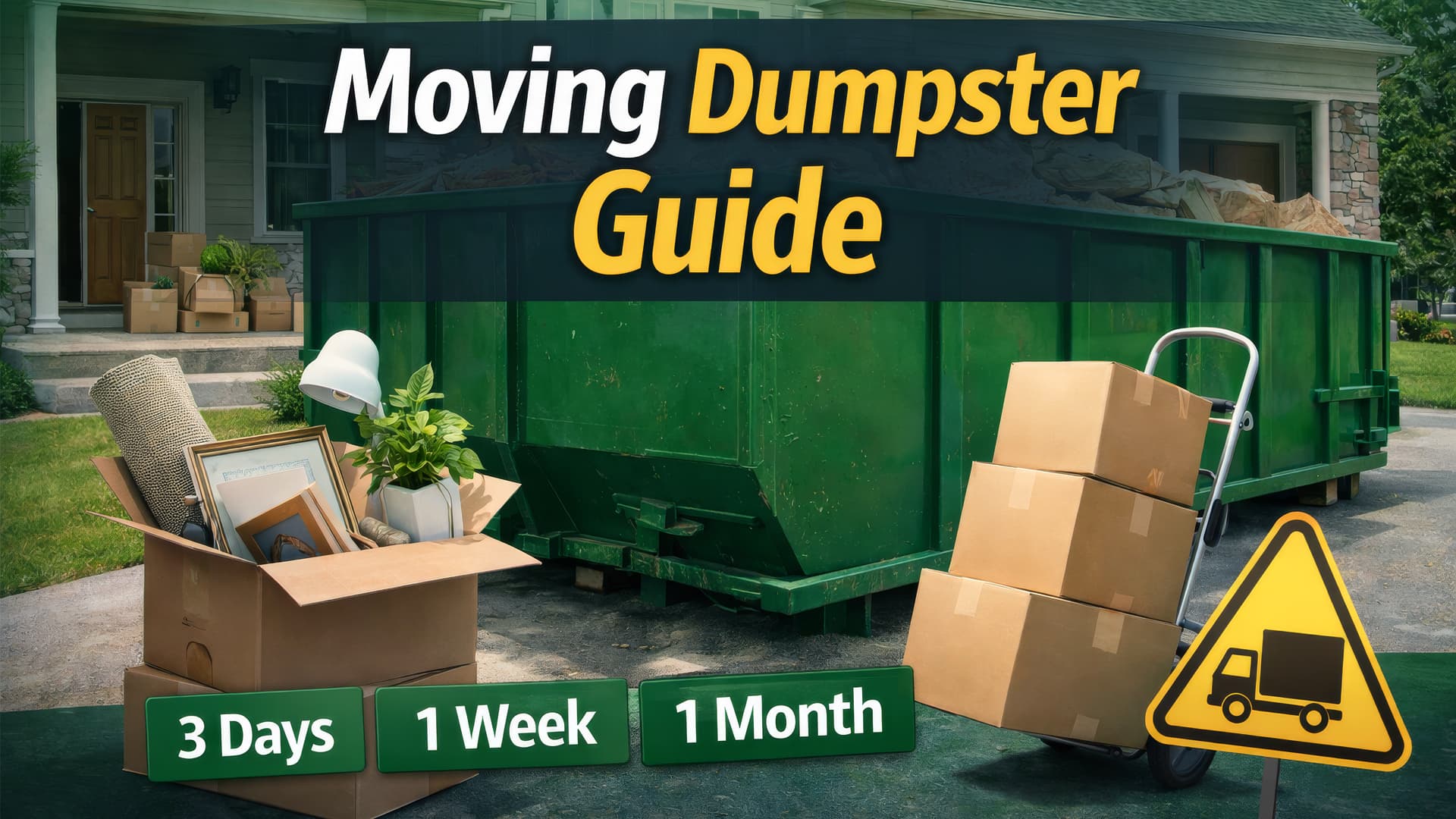
Moving forces every household to confront years of accumulated stuff — the furniture that never quite fit, the tools from a project you will never finish, the appliances that came with the house but were never worth replacing until now. The average move generates 1–3 truckloads of items that will not make it to the new address.
A dumpster rental during a move is one of the most efficient decisions you can make. Instead of multiple trips to donation centers, three overflowing trash bins over six weeks, or a garage full of "I'll deal with it later" items, a dumpster handles everything in one delivery and one pickup.
Quick answer: For most residential moves, a 10-yard dumpster is the right size. If you are doing a major pre-move purge from a large home or combining with renovation work before listing, step up to a 20-yard.
Moving Debris vs. Dumpster Size
| Move Type | Dumpster Size | Typical Volume |
|---|---|---|
| Apartment or small home (under 1,200 sq ft) | 10 yard | 2–5 cubic yards |
| Standard single-family home (1,200–2,500 sq ft) | 10 yard | 4–8 cubic yards |
| Large home or long-term residence (2,500+ sq ft) | 20 yard | 6–12 cubic yards |
| Downsizing significantly (large home to condo/apartment) | 20 yard | 8–14 cubic yards |
| Estate cleanout + move combined | 30 yard | 12–20+ cubic yards |
The volume varies significantly based on how long you have lived in the home and how aggressively you purge. Households that have been in the same house 10+ years typically generate more than newer residents.
What Goes in the Dumpster When Moving
A move-related dumpster is different from a renovation dumpster — it is primarily filled with household goods rather than construction debris. This makes the weight limit almost never a concern (furniture, boxes, and household items are light relative to tile or concrete).
Common Move-Dumpster Items
- Furniture that is not worth moving — worn couches, broken bed frames, outdated entertainment centers
- Mattresses — old mattresses that were going to be replaced at the new house anyway
- Appliances not included in the sale (leaving behind a 20-year-old chest freezer? It goes in the dumpster)
- Exercise equipment that has not been used in years — treadmills, ellipticals, stationary bikes
- Garage and basement items — broken tools, partial paint cans (dried only), worn outdoor equipment
- Carpeting if you are replacing flooring before listing
- Yard debris from pre-listing landscaping cleanup
- Moving boxes and packing materials after unpacking at the new house
What Not to Put in a Moving Dumpster
| Item | Alternative |
|---|---|
| Refrigerators, AC units | Appliance retailer haul-away |
| Working electronics | Donate or sell |
| Working furniture | Donate, Facebook Marketplace, or estate sale |
| Liquid paint | HHW event (dry old cans first) |
| Propane tanks | Exchange at retailers |
| Batteries | Retailer take-back |
For the complete list, see our prohibited items guide. For appliance-specific guidance, see our appliance disposal guide.
The Donation vs. Dumpster Decision
Before loading, sort items into two categories:
Donate or sell (keeps it out of landfill and may earn money):
- Working furniture in decent condition
- Functional appliances
- Clothing, linens, and textiles
- Books and media
- Working tools and equipment
- Kids' toys and games
Dumpster (truly at end of life):
- Broken, stained, or damaged items that donation centers will not accept
- Items too old or worn to be useful to anyone
- Partial materials (half a roll of carpet padding, old paint)
Practical reality: Most donation centers — Goodwill, Salvation Army, Habitat for Humanity ReStores — are selective about what they accept. Worn furniture, stained mattresses, outdated electronics, and incomplete sets are routinely rejected. The dumpster is the right destination for these items.
When to Schedule Your Move Dumpster
Timing matters. The optimal window depends on whether you are a seller, buyer, or renter.
As a Seller
Ideal timing: 2–4 weeks before your move-out date.
Pre-listing purges improve how the home shows, which directly affects sale price. Staging professionals consistently recommend clearing out furniture, personal items, and clutter before photos and showings.
Get the dumpster delivered early enough to:
- Stage the home for photography and showings (empty looks better in listings)
- Clear out items before the moving truck arrives
- Allow time for final cleaning after the dumpster is removed
For pre-listing renovation debris: If you are doing any pre-listing repairs or updates (new carpet, paint, fixture replacement), include that debris with your move-out dumpster. One combined rental is cheaper than two separate ones. See our home renovation dumpster guide for sizing renovation debris.
As a Buyer (Moving Into a New Home)
Ideal timing: During the first 2–4 weeks after closing.
New homeowners often inherit items left by the previous owner:
- Old appliances in the basement or garage
- Leftover construction materials
- Outdoor equipment and junk
- Stored items throughout the home
A 10-yard rental in the first month of ownership handles a thorough initial purge and sets the home up the way you want it.
As a Renter
Ideal timing: 1–2 weeks before move-out.
Many renters face lease-end cleanouts with items that accumulated and cannot realistically go to the new apartment. A 10-yard container handles most apartment-to-apartment or apartment-to-house moves.
Check whether your rental agreement or building management has restrictions on dumpster placement in the parking lot or near the building. Some property managers require approval.
Moving + Renovation: The Combined Project
The highest-value time to rent a dumpster is when moving overlaps with renovation work — at either the outgoing or incoming property. This combination is extremely common:
- Selling side: Replacing carpet, painting, updating fixtures before listing generates debris alongside move-out waste
- Buying side: New homeowners frequently do a pre-move-in renovation before furniture arrives
In both cases, a single 20-yard dumpster handles both the renovation debris and the household purge. Renting separately for each project costs $200–$400 more than a single combined rental.
For renovation-specific sizing guidance, see our home renovation dumpster guide. If your move falls in December or January, our year-end renovation cleanup guide covers seasonal timing and holiday pricing.
Downsizing: When You Need More Room
Downsizing from a large house to a smaller home, condo, or retirement community generates significantly more dumpster-eligible items than a same-size move. When an entire household of 30+ years must fit into a smaller space:
- Furniture that does not fit in the new floorplan
- Items from a garage or basement that will not exist at the new location
- Collections, hobbies, and equipment that no longer fit the new lifestyle
- Items that adult children do not want but the household has held onto
For major downsizing projects, a 20-yard container is typically the right size. Some large-estate downsizing projects justify a 30-yard. For moves involving the estate of a deceased family member, see our spring cleaning and estate cleanout guide.
Saving Money on Your Move Dumpster
1. Combine the donation run and dumpster on the same day
Sort items into "donate" and "dumpster" piles first, then load the dumpster with what remains. Trying to make these decisions inside the dumpster is time-consuming.
2. Rent before the moving truck arrives
Do not wait until after the move to rent a dumpster. The best time to make purge decisions is during packing, not after. Rent 1–2 weeks before the moving truck.
3. Use the full rental period
Standard rentals include 7 days. Use every day. Haul boxes as you pack, purge the garage early, and let the dumpster sit for the full week rather than rushing to fill it in one day.
4. Ask about flat-rate pricing
Some providers offer flat-rate move-specific pricing — a set fee for a 10-yard container with a specific weight limit. These are often $50–$100 cheaper than standard C&D rates because moving debris is consistently light.
For more savings strategies, see our dumpster rental savings guide.
Moving Dumpster Cost Estimate (2026)
| Container Size | Typical Cost | Best For |
|---|---|---|
| 10 yard | $250–$450 | Most residential moves |
| 20 yard | $300–$550 | Large homes, downsizing |
| 30 yard | $375–$650 | Estate cleanouts + moves |
For location-specific pricing, see our dumpster rental cost guide or search for local providers near you.
Find a Moving Dumpster Near You
For most moves, the 10-yard is the right answer. Order it 1–2 weeks before your move-out date, sort and load as you pack, and have it picked up before the moving truck arrives. One dumpster rental is often the most efficient decision you make during the entire move.
Find a hauler in your ZIP.
Browse verified dumpster rental companies in your area — ratings, reviews, and pricing in one place.
Search local providersRelated articles.
Year-End Renovation Cleanup: Dumpster Rental Guide
Year-end renovation cleanup guide: right dumpster size for post-holiday purges, winter projects, tax-year timing, and contractor debris.
ReadWhat Size Dumpster for a Kitchen Remodel?
A kitchen remodel needs a 20-yard dumpster for most homes. Learn exact sizing by scope, what weighs the most, and how to avoid paying for a second haul.
Read