Bagster vs Dumpster Rental: Full Comparison
Bagster vs dumpster rental compared by cost per cubic yard, capacity, weight limits, and convenience. See which option saves money for your project.
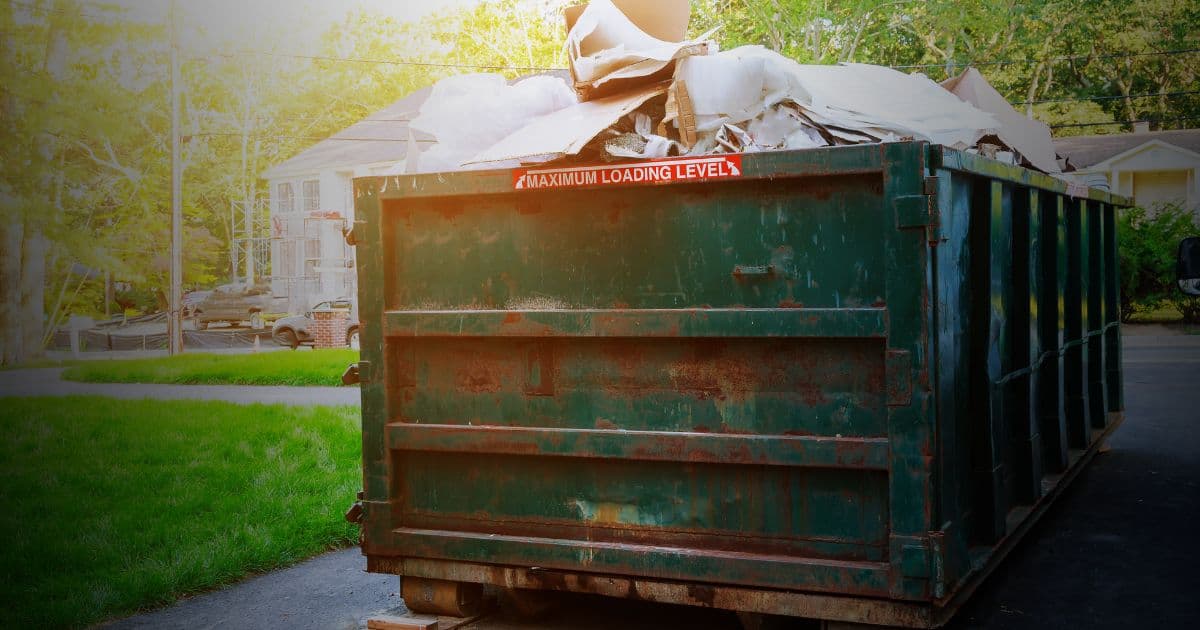
A Bagster costs $180–$380 total for 3 cubic yards of capacity. A 10-yard dumpster costs $275–$450 for more than triple the space. On a per-cubic-yard basis, the Bagster is the more expensive option in almost every scenario.
The short answer: A Bagster makes sense for very small, lightweight cleanups where you need flexibility and don't want a container in your driveway. For anything beyond a single room of light debris, a dumpster rental delivers better value per dollar spent.
What Is a Bagster?
The Bagster (officially "Dumpster in a Bag") is a product made by Waste Management. It's a heavy-duty woven polypropylene bag you purchase at Home Depot, Lowe's, or online for about $30. You unfold it, fill it with debris, then schedule a pickup through Waste Management for an additional $150–$350 depending on your zip code.
Key Bagster specs:
- Dimensions: 8 feet long x 4 feet wide x 2.5 feet tall
- Capacity: 3 cubic yards (about 606 gallons)
- Weight limit: 3,300 lbs (1.65 tons)
- Single-use: The bag is not reusable — one fill, one pickup, one disposal
The bag folds flat, which means you can store it in a closet or garage until you're ready to use it. That portability is its main selling point.
What Is a Dumpster Rental?
A roll-off dumpster is a large metal container delivered to your driveway or job site by truck. You fill it over a set rental period (typically 7–14 days), then the company picks it up and hauls the contents to a landfill or transfer station.
Dumpsters come in four standard sizes. Here's how they compare to the Bagster:
| Spec | Bagster | 10-Yard | 20-Yard | 30-Yard |
|---|---|---|---|---|
| Capacity | 3 cubic yards | 10 cubic yards | 20 cubic yards | 30 cubic yards |
| Weight limit | 3,300 lbs | 4,000–6,000 lbs | 6,000–8,000 lbs | 8,000–10,000 lbs |
| Dimensions | 8' x 4' x 2.5' | 12' x 8' x 3.5' | 22' x 8' x 4.5' | 22' x 8' x 6' |
| Rental period | No limit (you schedule pickup) | 7–14 days | 7–14 days | 7–14 days |
| Total cost | $180–$380 | $275–$450 | $350–$550 | $400–$650 |
| Cost per cubic yard | $60–$127 | $28–$45 | $18–$28 | $13–$22 |
| Reusable | No (single-use bag) | Yes (metal container) | Yes | Yes |
The cost-per-cubic-yard row is the number that matters most. The Bagster costs 2–4x more per cubic yard than a standard dumpster rental.
For a full breakdown of dumpster pricing by size and region, see our 2026 dumpster rental cost guide.
Full Cost Comparison
Bagster Total Cost
The Bagster has two costs that are easy to underestimate:
- Bag purchase: $30 at Home Depot or Lowe's
- Pickup fee: $150–$350 (varies by zip code — urban areas pay more)
Total: $180–$380 for 3 cubic yards
That pickup fee is the catch. Many buyers see the $30 price tag in-store and assume that's the total cost. It's not. The pickup fee is often 5–10x the purchase price, and you won't know the exact amount until you enter your address on thebagster.com or call to schedule.
Additional Bagster costs to watch for:
- Guaranteed Day Service: An optional add-on fee to lock in a specific pickup date. Without it, Waste Management gives you a 5–7 day pickup window with no guaranteed day.
- Multiple bags: Each Bagster requires its own pickup fee. Two Bagsters = two pickup fees. At that point, a dumpster rental is almost certainly cheaper.
- Overweight penalties: Exceeding the 3,300 lb weight limit can result in refused pickup or surcharges.
Dumpster Rental Total Cost
Dumpster rental pricing is more transparent. Most companies quote a flat rate that includes:
- Delivery and pickup
- A 7–14 day rental window
- A set weight allowance (typically 2–4 tons depending on size)
- Disposal fees up to the weight limit
| Dumpster Size | Average Cost | Weight Included | Extra Weight Fee |
|---|---|---|---|
| 10-yard | $275–$450 | 2–3 tons | $40–$75/ton |
| 20-yard | $350–$550 | 3–4 tons | $40–$75/ton |
| 30-yard | $400–$650 | 4–5 tons | $40–$75/ton |
| 40-yard | $450–$750 | 5–6 tons | $40–$75/ton |
The only common add-on fees are overage charges for exceeding your weight limit or extending the rental period beyond the included days.
For a deeper dive into what affects pricing, see our guide to saving money on dumpster rentals.
Real-World Project Cost Scenarios
Raw numbers are useful, but project-specific comparisons show the real difference.
Scenario 1: Single-Room Cleanout (Small Job)
Clearing out a spare bedroom, home office, or small attic space — roughly 2–3 cubic yards of light household items.
| Option | Cost | Capacity Used | Your Effort |
|---|---|---|---|
| Bagster | $180–$330 | 2–3 yards (good fit) | Load the bag, schedule pickup |
| 10-yard dumpster | $275–$450 | 2–3 of 10 yards used | Load the dumpster over 7 days |
Verdict: The Bagster saves $50–$120 here and doesn't require driveway space. This is its strongest use case.
Scenario 2: Garage Cleanout (Medium Job)
A full garage cleanout generates 5–8 cubic yards of debris — old furniture, boxes, tools, shelving, broken appliances.
| Option | Cost | Capacity Used | Your Effort |
|---|---|---|---|
| Bagster (x2) | $360–$660 | 6 yards (two bags needed) | Fill two bags, pay two pickup fees |
| 10-yard dumpster | $275–$450 | 5–8 of 10 yards used | Load one container over a weekend |
Verdict: The dumpster wins by $85–$210 and requires half the coordination. Two Bagster pickups also mean two separate scheduling windows.
Scenario 3: Kitchen Renovation (Large Job)
A kitchen demo produces 8–15 cubic yards of cabinets, countertops, flooring, drywall, and fixtures — much of it heavy.
| Option | Cost | Capacity Used | Your Effort |
|---|---|---|---|
| Bagster (x3–5) | $540–$1,900 | 9–15 yards (3–5 bags) | Multiple fills and pickups over weeks |
| 20-yard dumpster | $350–$550 | 8–15 of 20 yards used | Load as you demo, one pickup |
Verdict: The dumpster saves $190–$1,350. Multiple Bagsters for a renovation is impractical and expensive. A single 20-yard container handles the entire project. See our home renovation dumpster guide for sizing details.
Scenario 4: Roof Replacement
A roof tear-off for a 2,000 sq ft home generates 15–25 cubic yards of shingles weighing 4,000–8,000 lbs.
| Option | Cost | Notes |
|---|---|---|
| Bagster | Not viable | Weight limit (3,300 lbs) exceeded by a single square of shingles in many cases |
| 20-yard dumpster | $350–$550 | Handles 3–4 tons; may need heavy-debris surcharge |
| 30-yard dumpster | $400–$650 | Better fit for full roof replacements |
Verdict: A Bagster cannot handle roofing projects. The weight limit is too low and the capacity too small. See our roofing dumpster guide for the right approach.
Scenario 5: Landscaping Project
Clearing brush, soil, sod, and tree limbs from a yard renovation — 4–10 cubic yards, often heavy.
| Option | Cost | Notes |
|---|---|---|
| Bagster | $180–$380 | Only works for very light yard waste; soil and dirt may exceed weight limit quickly |
| 10-yard dumpster | $275–$450 | Better weight allowance for soil and heavy debris |
Verdict: A cubic yard of soil weighs roughly 2,200 lbs. A single Bagster can hold about 1.5 cubic yards of soil before hitting the weight limit — far less than the 3-yard volume capacity. For landscaping, the dumpster's higher weight limit is critical. Our landscaping dumpster guide covers material weights in detail.
Bagster Pros and Cons
Pros
- Low upfront cost. The $30 bag is cheap to buy and easy to store until you need it.
- No driveway space needed. The bag sits on any flat surface — grass, concrete, gravel — and takes up roughly the footprint of a small car.
- No rental period pressure. You fill the bag on your own timeline. There's no 7-day or 14-day clock running.
- Available at retail stores. Walk into Home Depot, buy one, and start filling it the same day.
- Good for tight spaces. Narrow driveways, gated yards, and properties where a truck can't easily maneuver a roll-off container.
Cons
- Expensive per cubic yard. At $60–$127 per cubic yard, you're paying 2–4x more than a dumpster rental.
- Tiny capacity. 3 cubic yards handles one small room — not a renovation, not a full cleanout, not a construction project.
- Strict weight limit. 3,300 lbs sounds generous until you load concrete, soil, or roofing shingles. Heavy materials fill the weight limit long before the volume limit.
- Unpredictable pickup timing. Without the Guaranteed Day Service add-on, Waste Management gives a 5–7 day pickup window. Your filled bag may sit on your property for a week.
- Single-use and non-recyclable. The polypropylene bag goes to the landfill along with your debris. A metal dumpster gets reused thousands of times.
- Pickup access restrictions. Waste Management requires the bag to be in a location their truck can access without backing up. Bags placed in backyards, behind fences, or on steep inclines may be refused.
- Hidden total cost. The $30 in-store price creates a false impression. The real cost is $180–$380 once you schedule pickup.
Dumpster Rental Pros and Cons
Pros
- Better value per cubic yard. A 10-yard dumpster costs $28–$45 per cubic yard — half to one-quarter the Bagster's rate.
- Much higher capacity. Even the smallest standard dumpster (10 yards) holds 3x more than a Bagster.
- Higher weight limits. 4,000–10,000 lbs depending on size, which handles heavy materials like concrete, shingles, and soil.
- Transparent pricing. Most companies quote a flat, all-inclusive rate upfront.
- Scheduled pickup. You choose when it gets picked up — no ambiguous 5–7 day windows.
- Durable and reusable. Steel construction handles sharp, heavy, and bulky debris without tearing.
Cons
- Requires driveway or street space. The smallest dumpster is 12' x 8' — roughly the size of a parking space. Tight properties may need a street permit.
- Delivery lead time. Most companies need 1–3 days advance booking. Same-day delivery is possible but not always available.
- Rental period limits. Standard rentals run 7–14 days. Extensions cost $5–$15 per extra day.
- Minimum cost is higher. Even if you barely fill it, the minimum rental is $275+. For very small jobs, that's overkill.
- Potential property damage. Heavy dumpsters can crack driveways. Place plywood under the container to protect surfaces.
When the Bagster Wins
The Bagster is the better choice in a narrow set of situations:
- Very small jobs — Cleaning out a single closet, bedroom, or small shed that produces under 3 cubic yards of light debris.
- No driveway access — Properties where a roll-off truck physically cannot deliver a dumpster (narrow streets, gated communities, dense urban areas).
- Unpredictable timeline — You're not sure when you'll finish the project and don't want a rental clock ticking. The Bagster sits there until you schedule pickup.
- Emergency preparedness — Buying a bag for $30 and storing it means you're ready for unexpected small cleanups without scheduling a delivery.
When a Dumpster Rental Wins
A dumpster rental is the better choice for the majority of projects:
- Any project over 3 cubic yards — That includes most garage cleanouts, estate cleanouts, home renovations, and construction projects.
- Heavy materials — Concrete, brick, dirt, roofing shingles, and tile will hit the Bagster's 3,300 lb weight limit before you fill the bag. Dumpsters handle 2–6 tons.
- Multi-day projects — Renovations, roofing jobs, and phased cleanouts need a container you can load incrementally. Scheduling multiple Bagster pickups is expensive and logistically painful.
- Cost-conscious large jobs — The math is unambiguous. Once you need more than one Bagster, a dumpster rental costs less.
- Commercial projects — Offices, retail spaces, and commercial construction generate too much volume and weight for a 3-cubic-yard bag.
The Break-Even Point
The critical question: at what point does a dumpster become cheaper than a Bagster?
One Bagster: $180–$380 for 3 cubic yards One 10-yard dumpster: $275–$450 for 10 cubic yards
If your project generates more than 3 cubic yards of debris, the dumpster is cheaper. That's approximately:
- One full pickup truck bed worth of debris
- A single large room of furniture and household items
- About 15–20 large trash bags of material
Most projects that involve the word "cleanout," "renovation," or "demolition" exceed 3 cubic yards. The Bagster's sweet spot is genuinely small — a single room of light junk and nothing more.
Alternatives to Both
If neither the Bagster nor a standard dumpster fits your situation:
- Junk removal service: A crew loads and hauls everything for you. Best for small jobs or when you can't do the physical work.
- Municipal bulk pickup: Many cities offer free or low-cost large-item pickup on scheduled days. Check your city's waste department.
- Trailer rental: Renting a utility trailer from a home improvement store ($20–$75/day) and hauling debris to the dump yourself. Only practical if you have a truck and the dump is nearby.
Frequently Asked Questions
Can I put the same materials in a Bagster as a dumpster?
Mostly yes, but with stricter limits. Both accept general household debris, furniture, yard waste, and construction materials. Neither accepts hazardous waste, tires, batteries, or paint. However, the Bagster's weight limit makes it impractical for heavy materials like concrete and soil, even though they're technically "accepted." See our prohibited items guide for a complete list.
How long can I keep a Bagster before scheduling pickup?
Indefinitely. There's no rental period — the bag sits on your property until you call for pickup. Some homeowners buy the bag months before they actually use it. The only risk is weather damage to the bag itself and potential HOA complaints about a filled bag sitting in your yard.
Is one Bagster ever cheaper than a dumpster?
Yes, for a single bag on a small project. If you fill one Bagster and your total cost is $180–$250 (low pickup fee area), it can undercut the minimum 10-yard dumpster rental of $275. But this only applies to projects generating under 3 cubic yards of light debris.
Can I place a Bagster on the street?
Technically yes, but Waste Management's pickup trucks need clear access and some municipalities require a permit for anything placed in the public right-of-way. Check your local permit requirements before placing the bag on a street or sidewalk.
What happens if my Bagster is too heavy?
Waste Management may refuse pickup or charge an overage fee. The driver weighs the bag at pickup, and anything over 3,300 lbs creates a problem. Unlike dumpster rentals, where you simply pay a per-ton overage, a Bagster refusal means rescheduling and removing material — a significant hassle.
How do I estimate if my debris will fit in a Bagster?
Three cubic yards is roughly equivalent to the bed of a standard pickup truck. If your debris would overflow a single truck bed, you need a dumpster. Our debris volume estimation guide walks through the calculation for different material types.
The Bottom Line
The Bagster works for small, lightweight, one-time cleanups where you value convenience over cost efficiency. A dumpster rental works for everything else — and at half to one-quarter the cost per cubic yard.
If your project is bigger than a single room of light junk, skip the Bagster. Find a dumpster rental provider in your area and get a flat-rate quote. You'll get 3–10x the capacity for a comparable or lower total price.
More resources:
Find a hauler in your ZIP.
Browse verified dumpster rental companies in your area — ratings, reviews, and pricing in one place.
Search local providersRelated articles.
Year-End Renovation Cleanup: Dumpster Rental Guide
Year-end renovation cleanup guide: right dumpster size for post-holiday purges, winter projects, tax-year timing, and contractor debris.
ReadWhat Size Dumpster Do You Need When Moving?
Moving dumpster rental guide: how to size for your move, what to put in it, and when to order. Most homes need a 10-yard dumpster.
Read