What Size Dumpster for a Kitchen Remodel?
A kitchen remodel needs a 20-yard dumpster for most homes. Learn exact sizing by scope, what weighs the most, and how to avoid paying for a second haul.
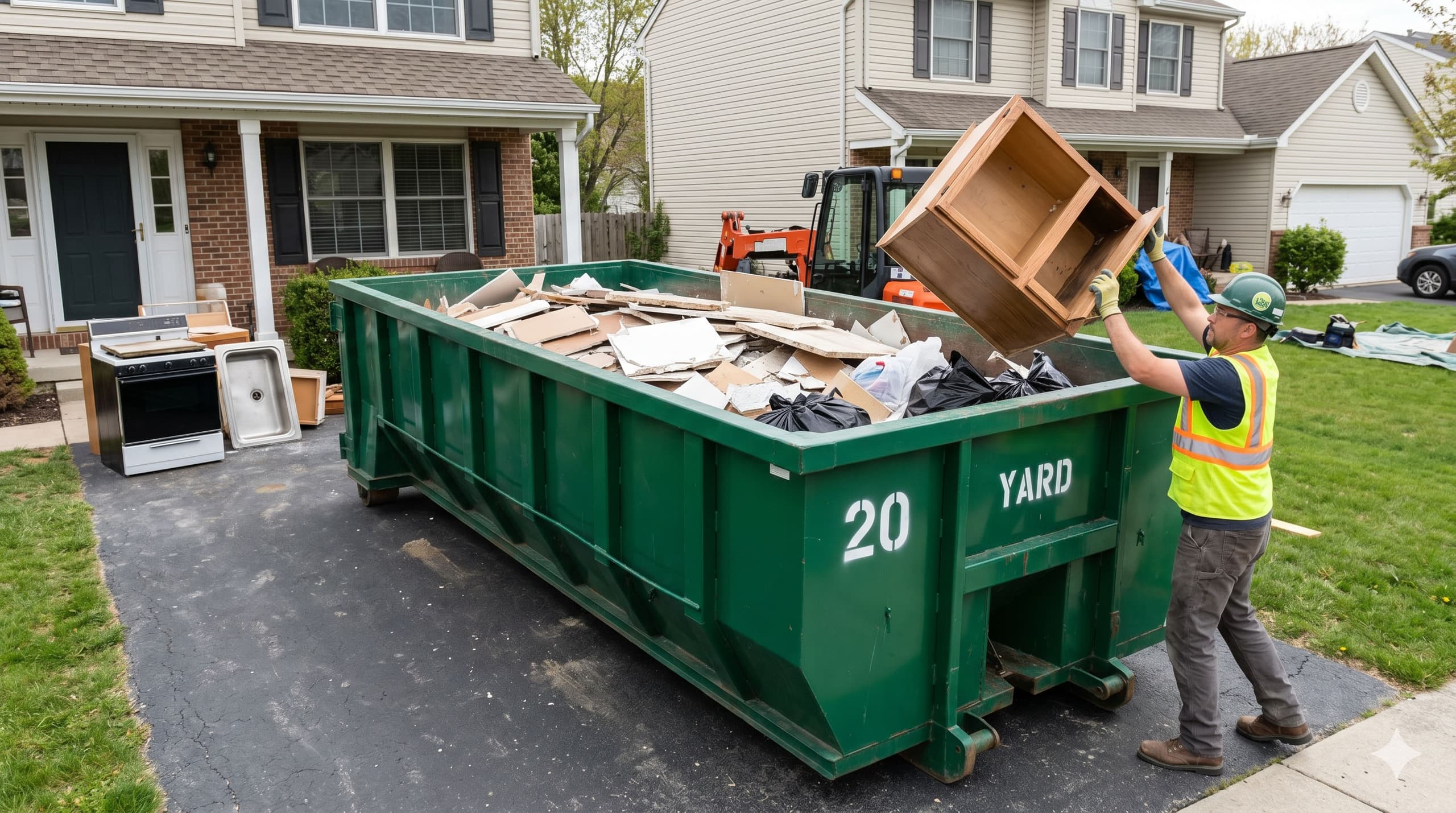
A kitchen remodel generates more debris than almost any other room renovation. Cabinets, countertops, appliances, flooring, drywall, backsplash tile, plumbing fixtures, and underlayment — all of it has to go somewhere. The wrong size means paying $200–$400 for a second delivery. The right size depends on how much kitchen you are tearing out.
Quick answer: For most kitchen remodels, rent a 20-yard dumpster. If you are doing a partial update (just cabinets or just countertops), a 10-yard is enough. If you are gutting the kitchen down to studs and renovating surrounding rooms at the same time, step up to a 30-yard.
Kitchen Remodel Scope vs. Dumpster Size
| Scope of Work | Dumpster Size | Typical Debris Volume |
|---|---|---|
| Countertop replacement only | 10 yard | 1–3 cubic yards |
| Cabinet replacement only | 10 yard | 3–5 cubic yards |
| Countertops + cabinets | 10–20 yard | 4–8 cubic yards |
| Full kitchen remodel (standard) | 20 yard | 8–14 cubic yards |
| Full kitchen + flooring replacement | 20 yard | 10–16 cubic yards |
| Gut to studs + structural changes | 30 yard | 15–22 cubic yards |
| Kitchen + adjacent room renovation | 30 yard | 18–28 cubic yards |
The jump from 10 to 20 yards costs about $75–$150 more but gives you double the capacity. If you are on the fence between the two, go with the 20-yard — it is almost always the right call for a full kitchen remodel.
What a Kitchen Remodel Actually Generates
Here is a breakdown of debris volume for common kitchen elements:
| Item | Volume | Notes |
|---|---|---|
| Upper cabinet run (10 linear feet) | 2–3 cubic yards | Doors, boxes, shelving, hardware |
| Lower cabinet run (10 linear feet) | 3–4 cubic yards | Heavier, deeper boxes |
| Countertops (10 linear feet) | 1–3 cubic yards | Laminate is lighter; granite/quartz is heavier |
| Kitchen flooring (200 sq ft) | 1–3 cubic yards | Depends on material and layers |
| Appliances (full set) | 2–3 cubic yards | Refrigerator, range, dishwasher, microwave |
| Drywall (one wall) | 0.5–1 cubic yard | Expands fast when broken up |
| Backsplash tile | 0.25–0.5 cubic yards | Dense material |
| Sink and plumbing fixtures | 0.25–0.5 cubic yards |
Total for a full remodel: Roughly 10–15 cubic yards for a standard American kitchen (10x12 to 12x15 feet). That is solidly within 20-yard territory.
The Weight Factor: Countertops and Flooring
Volume is not the only consideration — weight limits matter for heavy materials.
Granite and Quartz Countertops
Granite and quartz are heavy. A standard kitchen countertop (25–30 square feet at 1.25" thickness) weighs 400–600 lbs. Most 20-yard dumpsters have a 3–4 ton weight limit. One set of stone countertops adds relatively little weight — but if you are also removing tile flooring, the combined weight can approach the limit.
| Material | Weight per Square Foot | 200 sq ft Kitchen Floor |
|---|---|---|
| Ceramic tile (with backer) | 10–15 lbs | 1–1.5 tons |
| Porcelain tile (with backer) | 15–20 lbs | 1.5–2 tons |
| Hardwood flooring | 3–4 lbs | 300–400 lbs |
| Vinyl/LVP | 2–3 lbs | 200–300 lbs |
| Carpet | 1–2 lbs | 100–200 lbs |
If you are removing tile flooring alongside the kitchen tearout, be mindful of the combined weight. See our weight limits guide for detailed calculations.
Rule of thumb: Tile floors in a kitchen require consideration alongside countertop and cabinet weight. A full remodel with tile removal typically stays within the 20-yard weight limit for a standard kitchen, but confirm your container's weight limit before loading.
Appliance Disposal: What Goes in the Dumpster
Most appliances can go in a standard dumpster. The exception is refrigerators, freezers, and air conditioners.
Appliances That Can Go in the Dumpster
- Gas or electric ranges (after disconnecting the gas line)
- Dishwashers
- Microwave ovens
- Exhaust fans and hoods
- Trash compactors
- Ice makers (if not the refrigerant-containing type)
Appliances That Cannot Go in the Dumpster
Refrigerators, freezers, wine coolers, and AC units contain refrigerants (CFCs, HFCs) regulated by the EPA under Section 608 of the Clean Air Act. These must be:
- Drained by a certified technician before disposal, or
- Accepted at a facility that handles refrigerant recovery
Options:
- Appliance retailers offering haul-away of old units when delivering the new one (Home Depot, Lowe's, Best Buy — typically $15–$30)
- Your municipality's bulk waste pickup (call ahead to confirm appliance pickup schedule)
- Local appliance recyclers who handle refrigerant removal
For detailed appliance disposal guidance, see our appliance disposal guide.
Timing Your Kitchen Dumpster Rental
A kitchen remodel typically has two distinct debris phases that affect rental timing.
Phase 1: Demo Day
The first 1–3 days of a kitchen remodel generate 70–80% of total debris. Cabinet tearout, countertop removal, flooring demo, and any drywall work all happen early. Plan for the dumpster to be on-site for demo day and ready to load immediately.
Phase 2: Installation Scraps
The installation phase generates less debris but is spread over a longer period: cabinet packaging, flooring scrap, countertop cutoffs, tile spacers, caulk tubes, and miscellaneous materials. This phase adds 1–3 cubic yards over the remainder of the project.
Recommended rental period: 7–10 days covers most kitchen remodels. If your contractor is doing a major gut renovation with custom cabinetry (which takes 3–5 weeks for installation), consider a 14-day rental.
Most providers allow rental extensions at $10–$25/day if you need more time.
Do You Need a Permit for a Kitchen Remodel Dumpster?
In most cases, no — if you place the dumpster on your driveway. Driveway placement is permit-free in nearly every municipality in the United States.
Street placement requires a permit in most cities. For a kitchen renovation, a driveway placement almost always works:
- Standard 20-yard containers are 22 feet long and 8 feet wide — they fit in most two-car driveway lengths
- For one-car driveways (typically 12 feet wide), a 20-yard dumpster at 8 feet wide still leaves room for pedestrian access on one side
- If your driveway is under 18 feet long, consider a 10-yard container at 12 feet long, or ask your hauler about smaller specialized containers
For permit requirements by location, see our dumpster permit guide.
Protecting Your Driveway
A loaded 20-yard dumpster weighs 8,000–10,000 lbs (the container itself is 3,000–4,000 lbs; debris adds the rest). This is enough to crack asphalt or leave marks on concrete.
Protect your surface:
- Ask your hauler to place 4x6 boards under the wheels before setting the container
- Many companies carry these as standard practice; confirm when booking
- Avoid placing on new asphalt in hot weather — heat softens asphalt and the weight will cause indentations
- For pavers, request boards or plywood sheets spread under the container footprint
Kitchen Remodel Dumpster Checklist
Before calling to book:
- Measure your driveway length and width
- Estimate scope: partial update, full remodel, or gut renovation?
- Note flooring material — tile adds significant weight
- Confirm appliance disposal plan for refrigerator/freezer if applicable
- Check if contractor includes dumpster in their quote — avoid duplicate rentals
For bathroom remodel sizing — a common companion project — see our bathroom renovation dumpster guide.
Ready to Rent?
Find local providers for your kitchen remodel:
For a full kitchen remodel, order the 20-yard and get the project done. The extra $75–$150 over a 10-yard is always cheaper than paying for a second haul when you run out of room at 9.5 cubic yards.
Find a hauler in your ZIP.
Browse verified dumpster rental companies in your area — ratings, reviews, and pricing in one place.
Search local providersRelated articles.
Year-End Renovation Cleanup: Dumpster Rental Guide
Year-end renovation cleanup guide: right dumpster size for post-holiday purges, winter projects, tax-year timing, and contractor debris.
ReadWhat Size Dumpster Do You Need When Moving?
Moving dumpster rental guide: how to size for your move, what to put in it, and when to order. Most homes need a 10-yard dumpster.
Read